Overstimulation is a design problem
Design for Good
Overview
The PlayWell Project is a nonprofit that translates child development research into practical tools for families and educators, reframing overstimulation not as a behavioral issue, but as an environmental one.
Scope
+ concept + brand identity
+ naming + advertising campaign
+ research + creative strategy
+ app design + brand activation
-
Modern childhood environments are built for attention capture, not healthy development. Toys with lights and sounds, fast-paced media, and cluttered spaces overwhelm young nervous systems, shortening attention spans, weakening emotional regulation, and displacing the human interaction children need most. Parents know something is wrong. Without tools to identify or address it, the default response is guilt, not action.
-
The problem has been framed wrong. Overstimulation gets treated as a screen time debate, a parenting shortcoming — when it's actually an environmental design failure. The spaces and products children inhabit were optimized for engagement metrics, not developmental outcomes. If overstimulation is a design problem, it has a design solution.
-
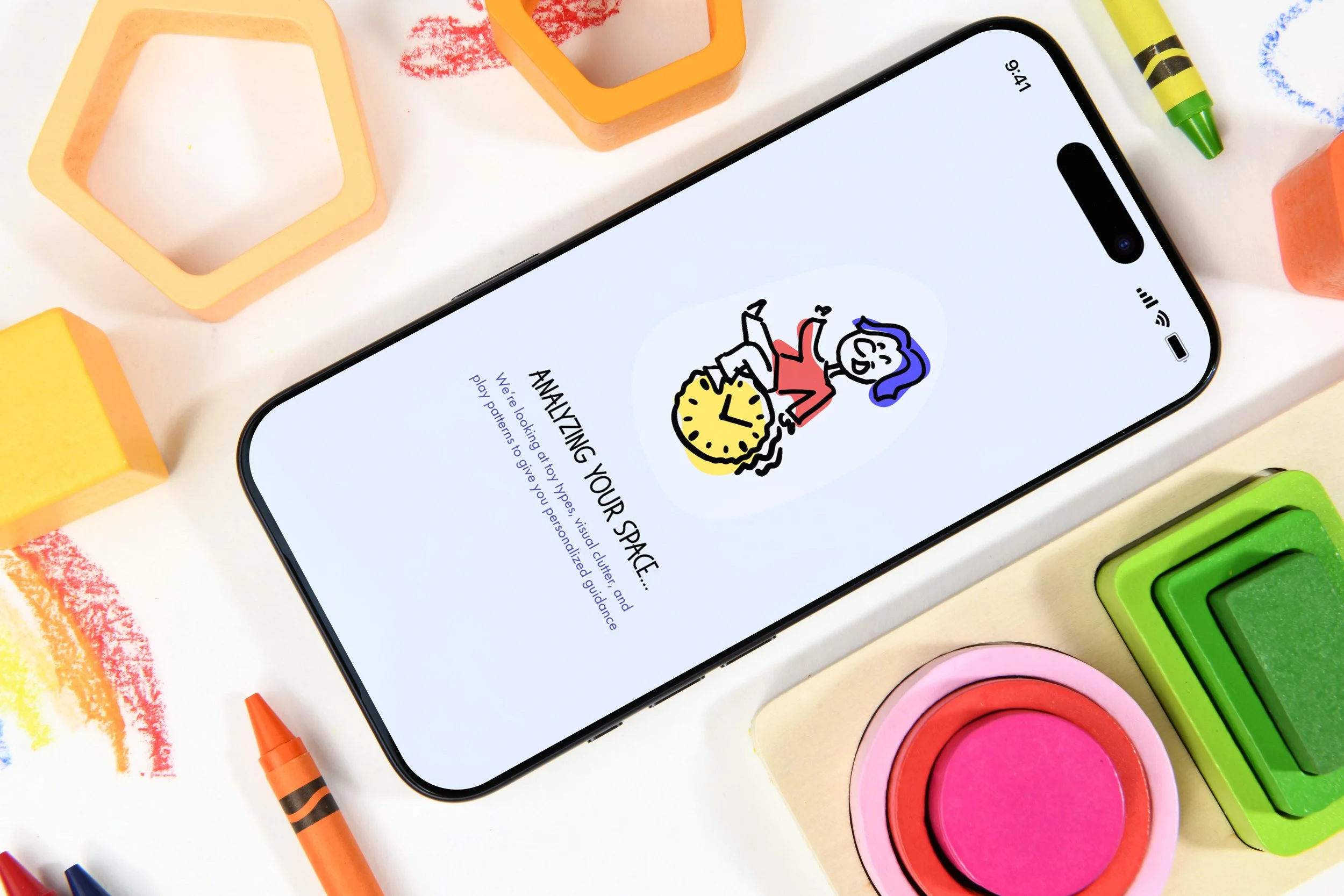
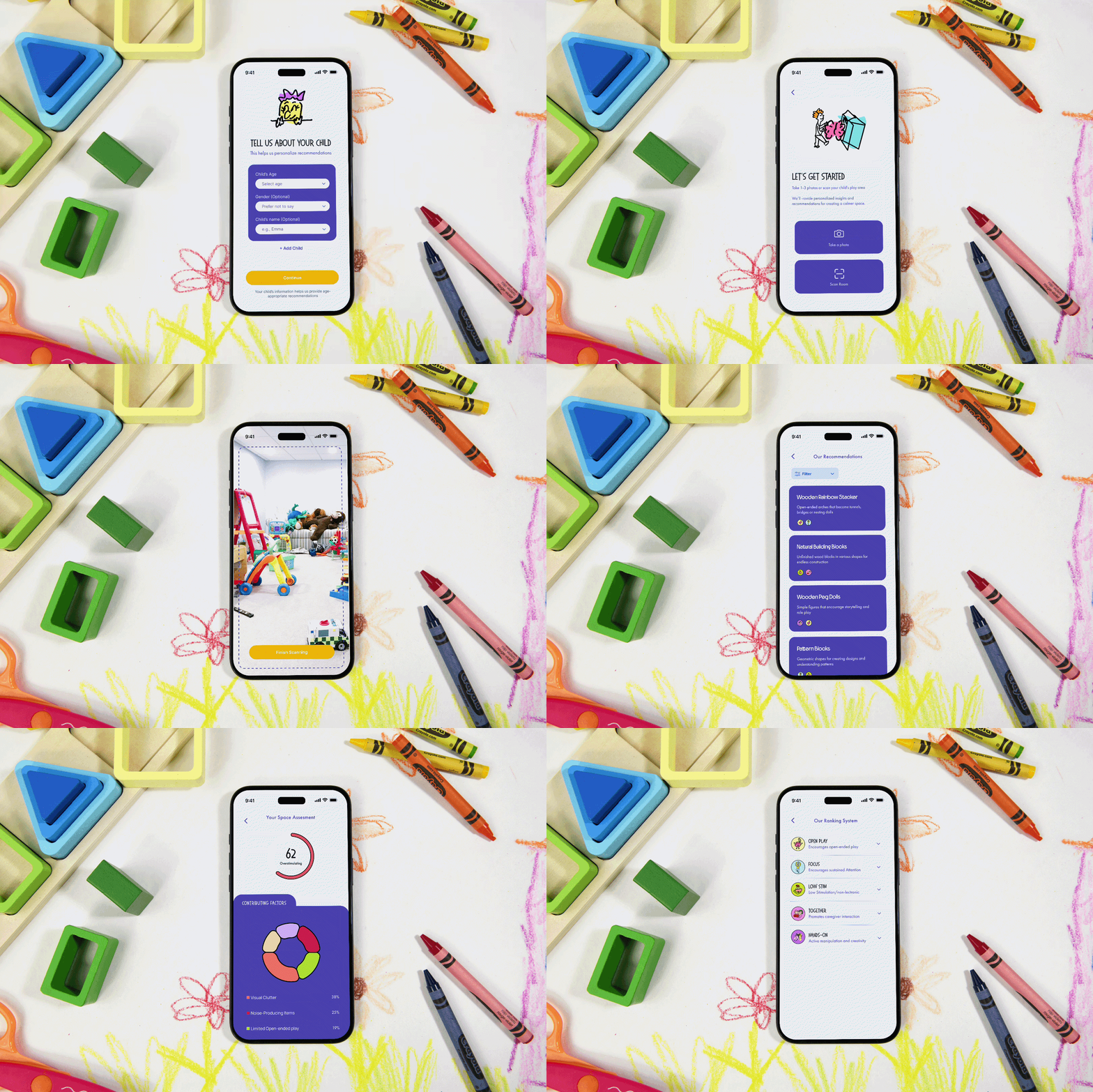
An interactive website where parents can assess their child’s toys and environment for overstimulation. In 5 minutes, parents upload photos or select from common toys and receive an instant “Stimulation Score” with personalized recommendations for improvement.
-
Makes the invisible visible: Parents can’t see “overstimulation” until we measure and visualize it
Creates urgency: A score of 78/100 triggers emotional response—guilt, concern, motivation
Provides direction: Doesn’t just identify problems; shows specific alternatives

Answer
The PlayWell Project delivers that solution through four interconnected tools: an ad campaign that reframes the conversation publicly, the Space Score app that gives caregivers a concrete way to evaluate their child's environment, the Pure Play icon system that makes developmentally sound toys identifiable at a glance, and a brand activation that brings the message into the spaces where families already gather.
Every touchpoint reinforces the same shift, from designing for attention to designing for development.
-
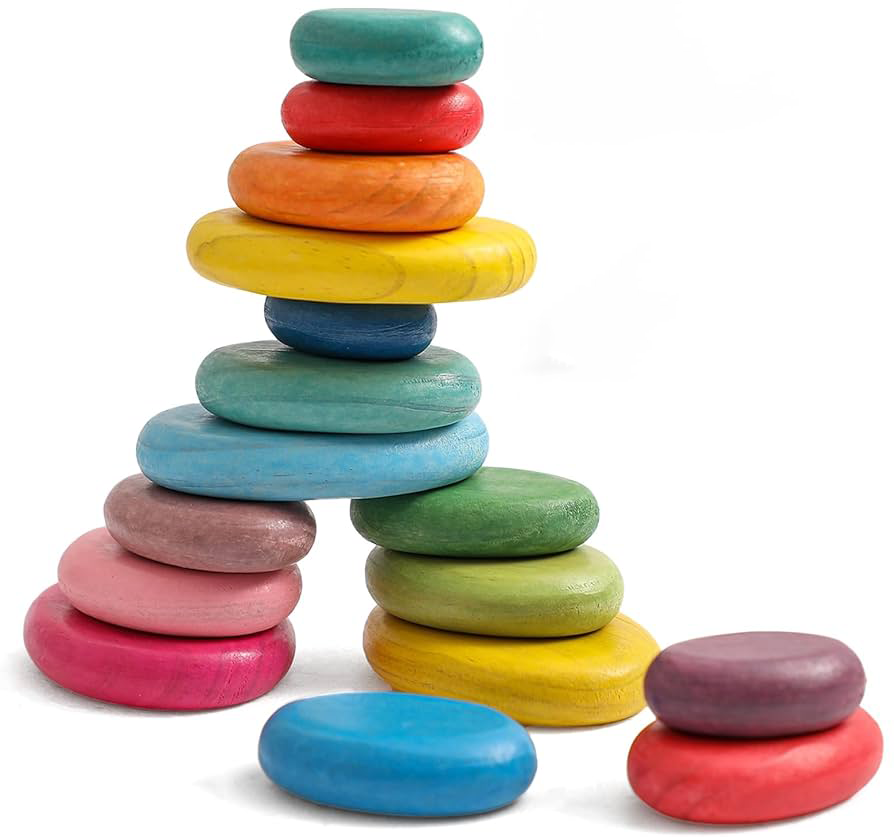
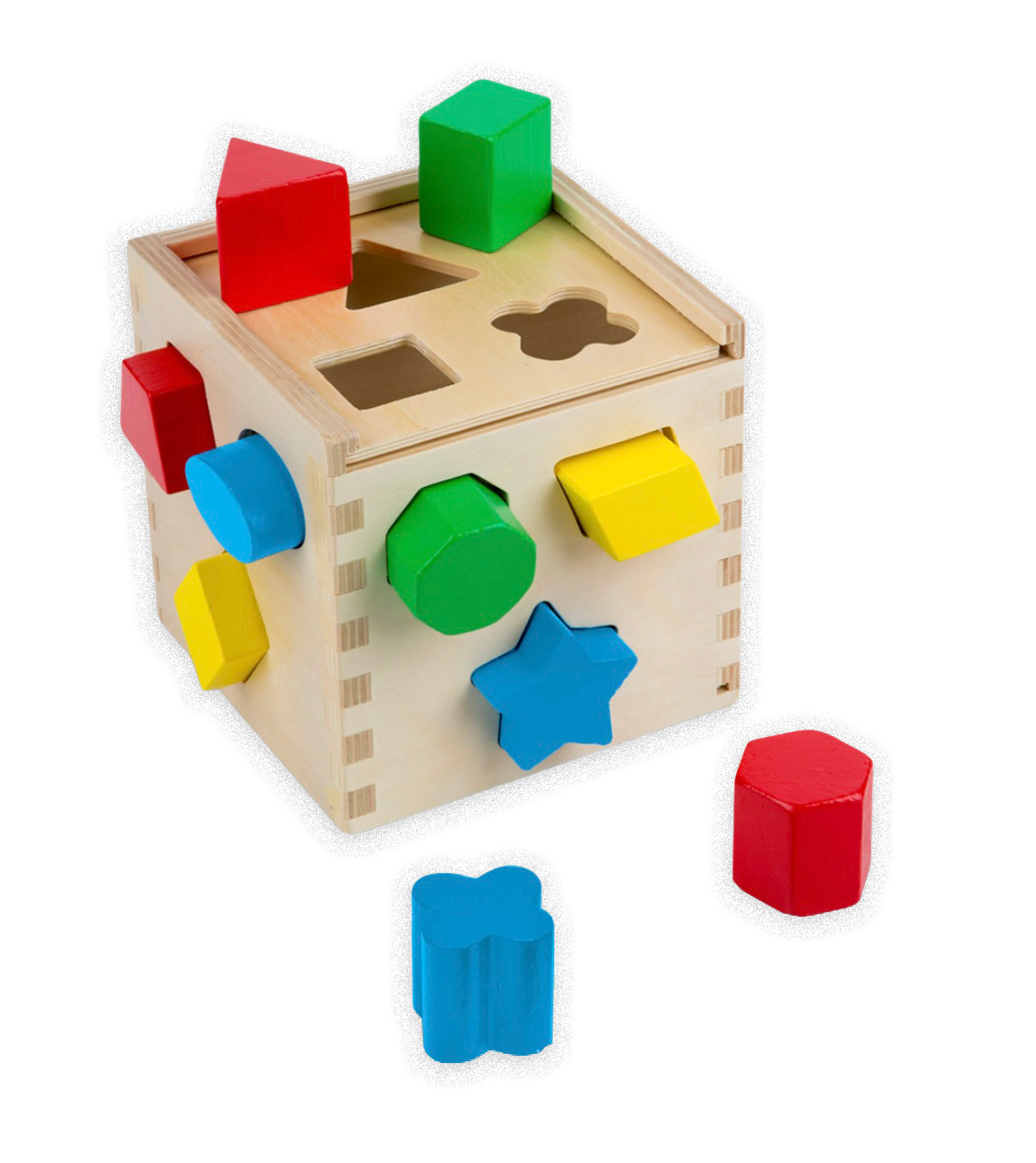
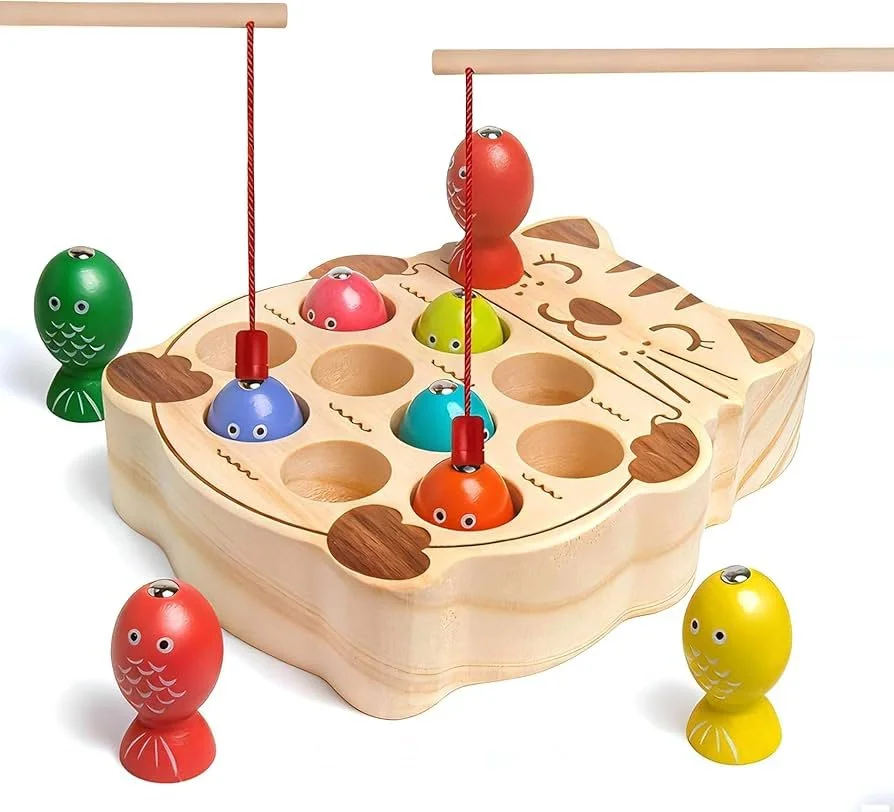
A clear, standardized rating system for toy packaging that helps parents quickly identify products that support healthy child development, similar to Organic or Fair Trade labels.
Together, these icons help parents choose toys that prioritize imagination, language development, and concentration, supported by a brand guidelines book that enables designers and manufacturers to adopt the system and communicate a product’s “developmental integrity.”
Build Better Play
Play Icon System

Open Play

Focus Play

Together
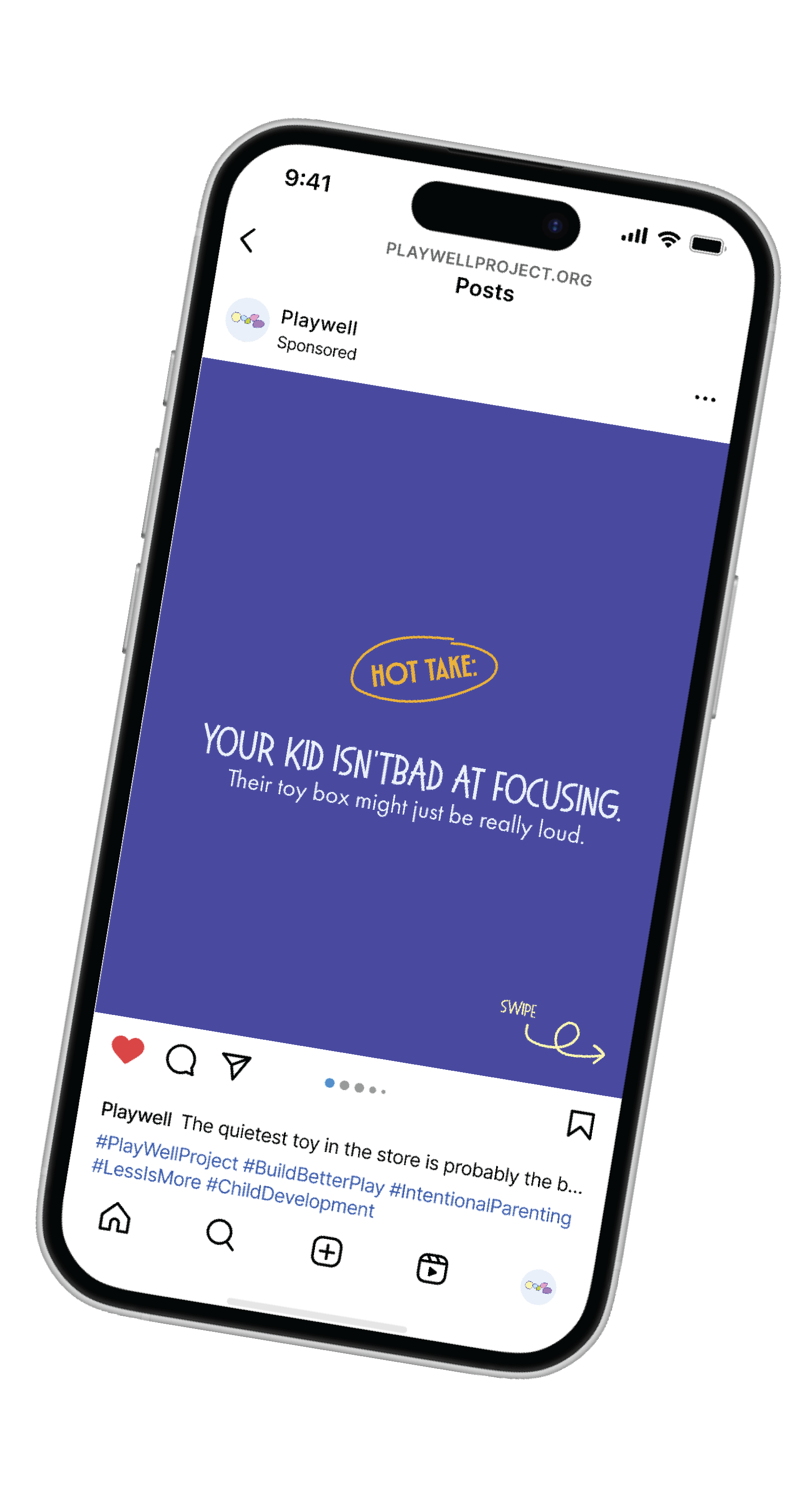
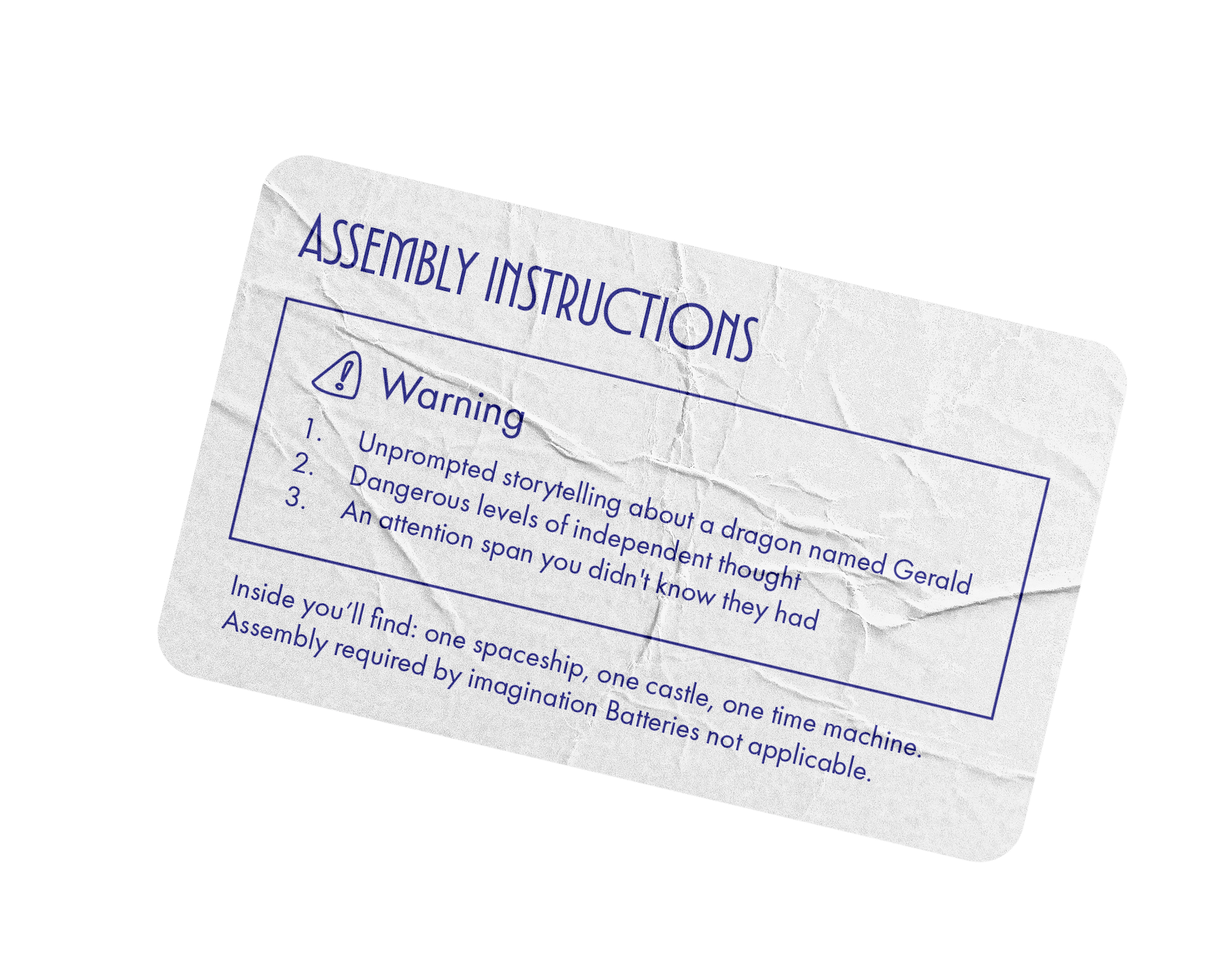
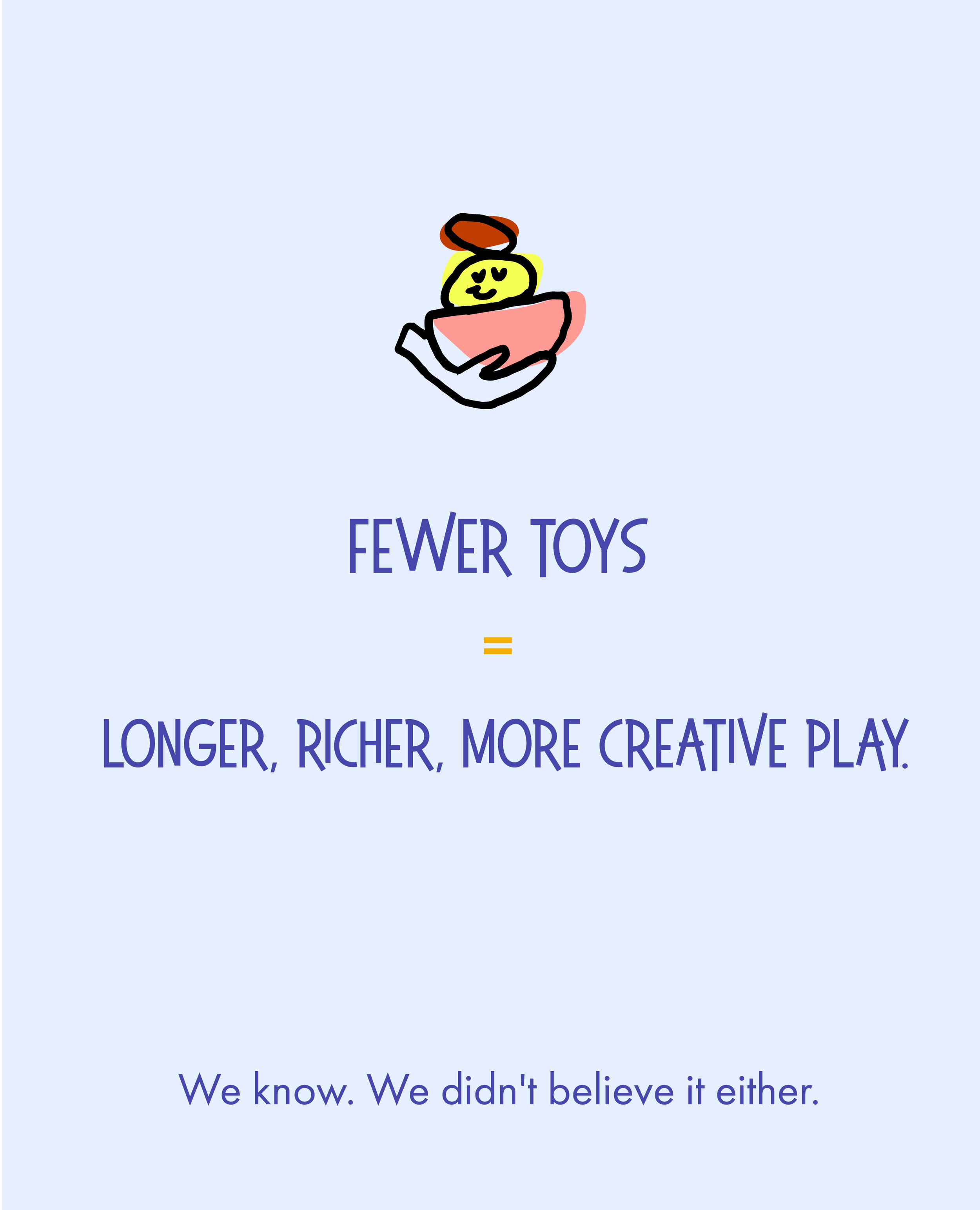
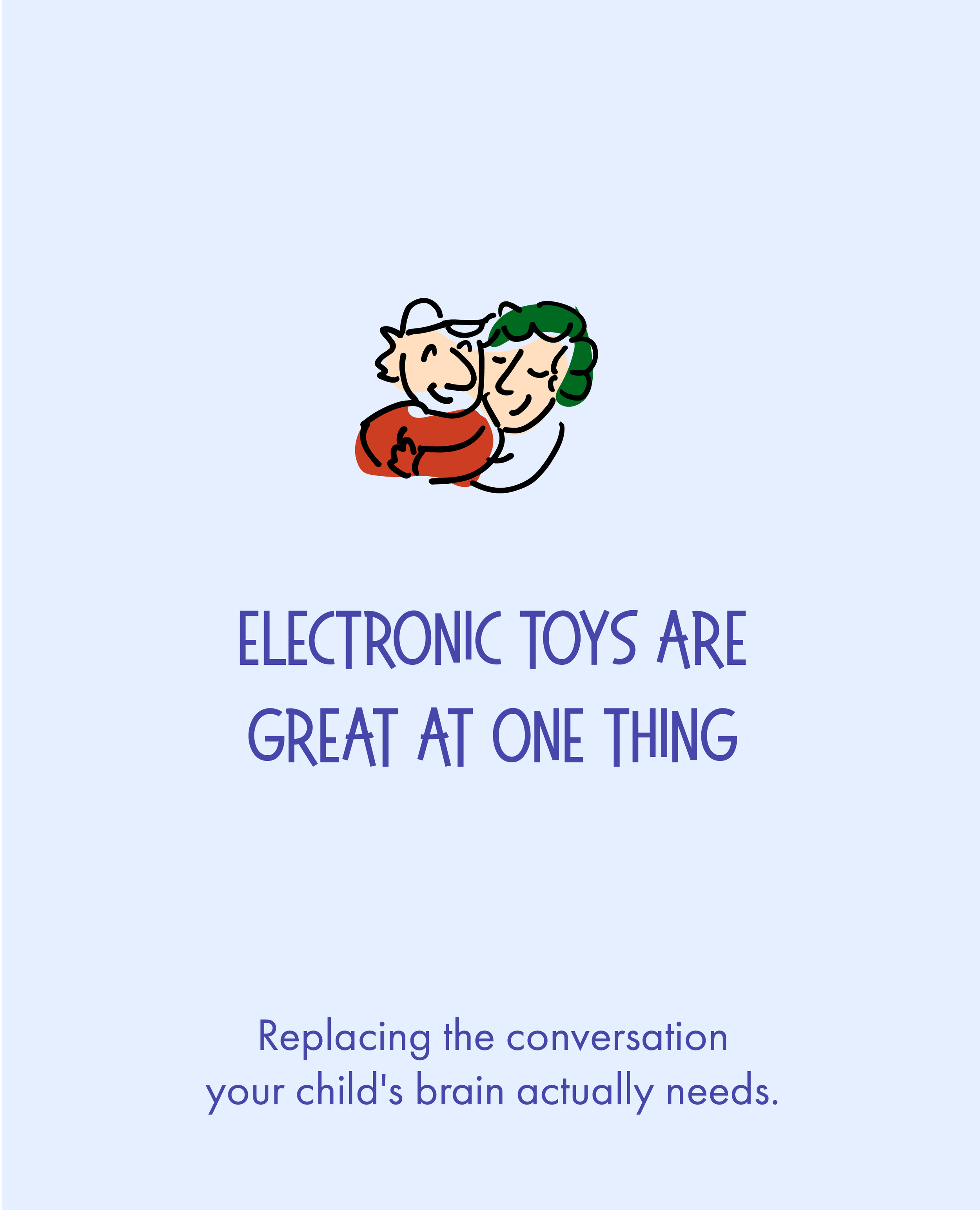
Advertisement Campaign
You Can’t Fix What You Can’t See
-
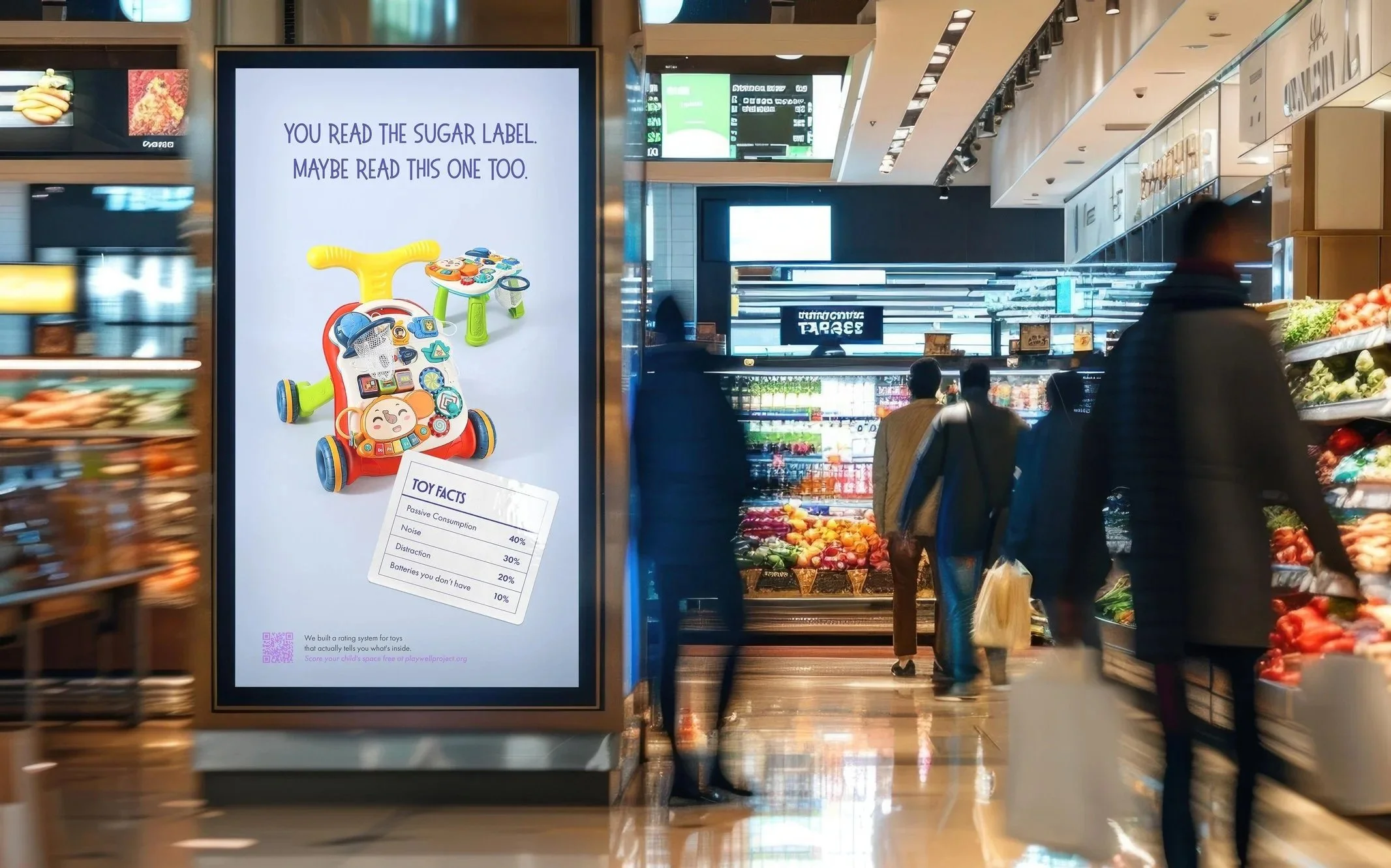
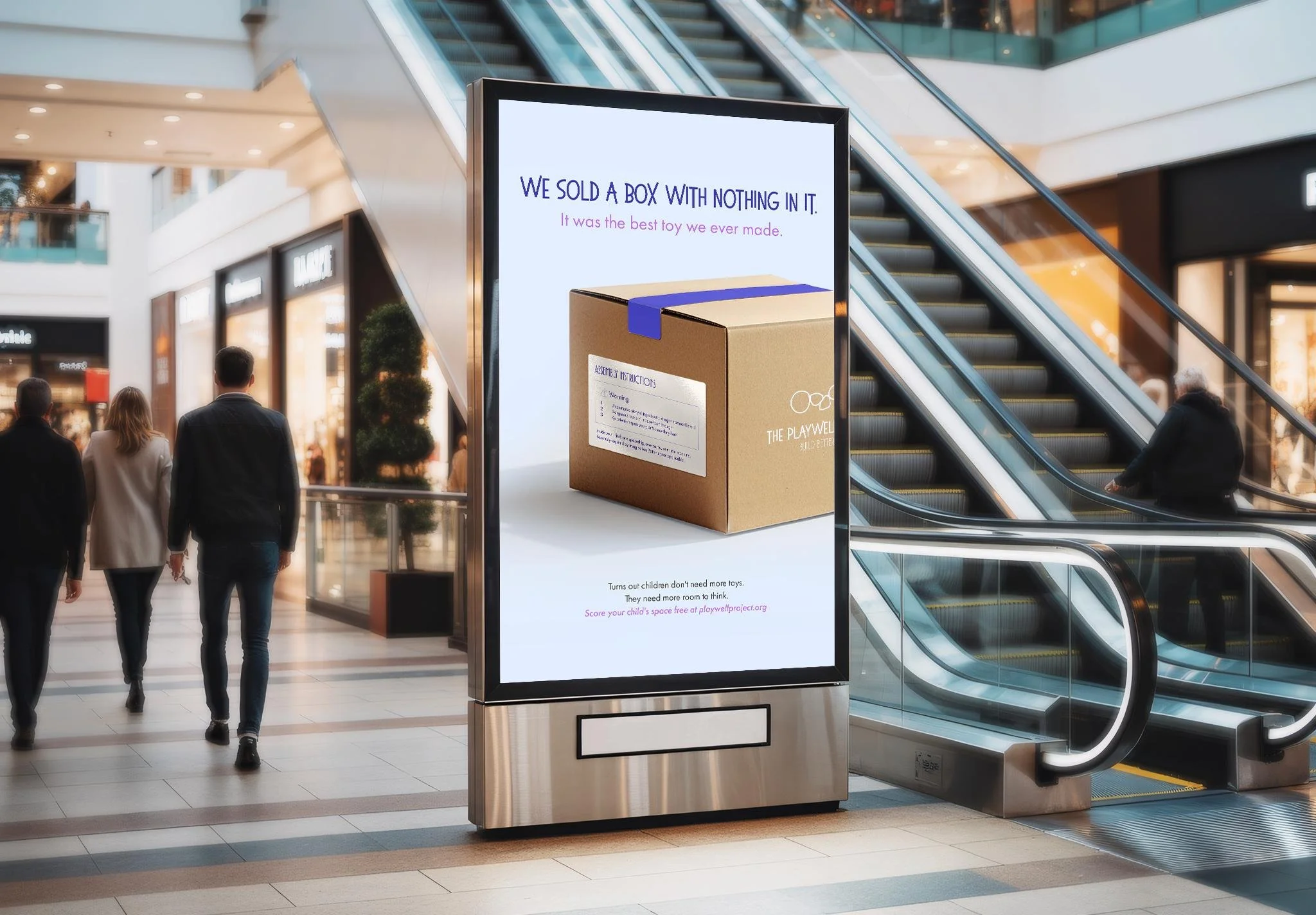
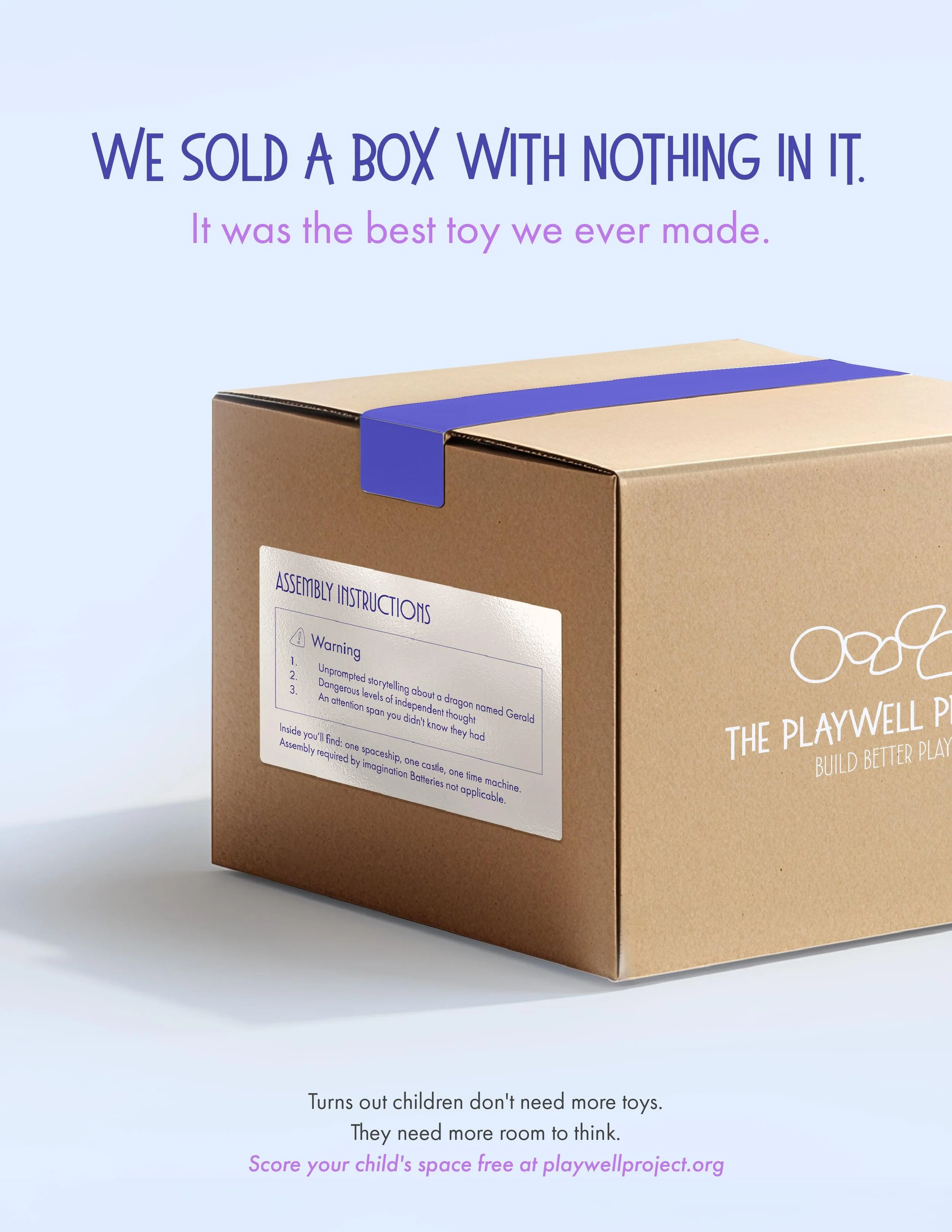
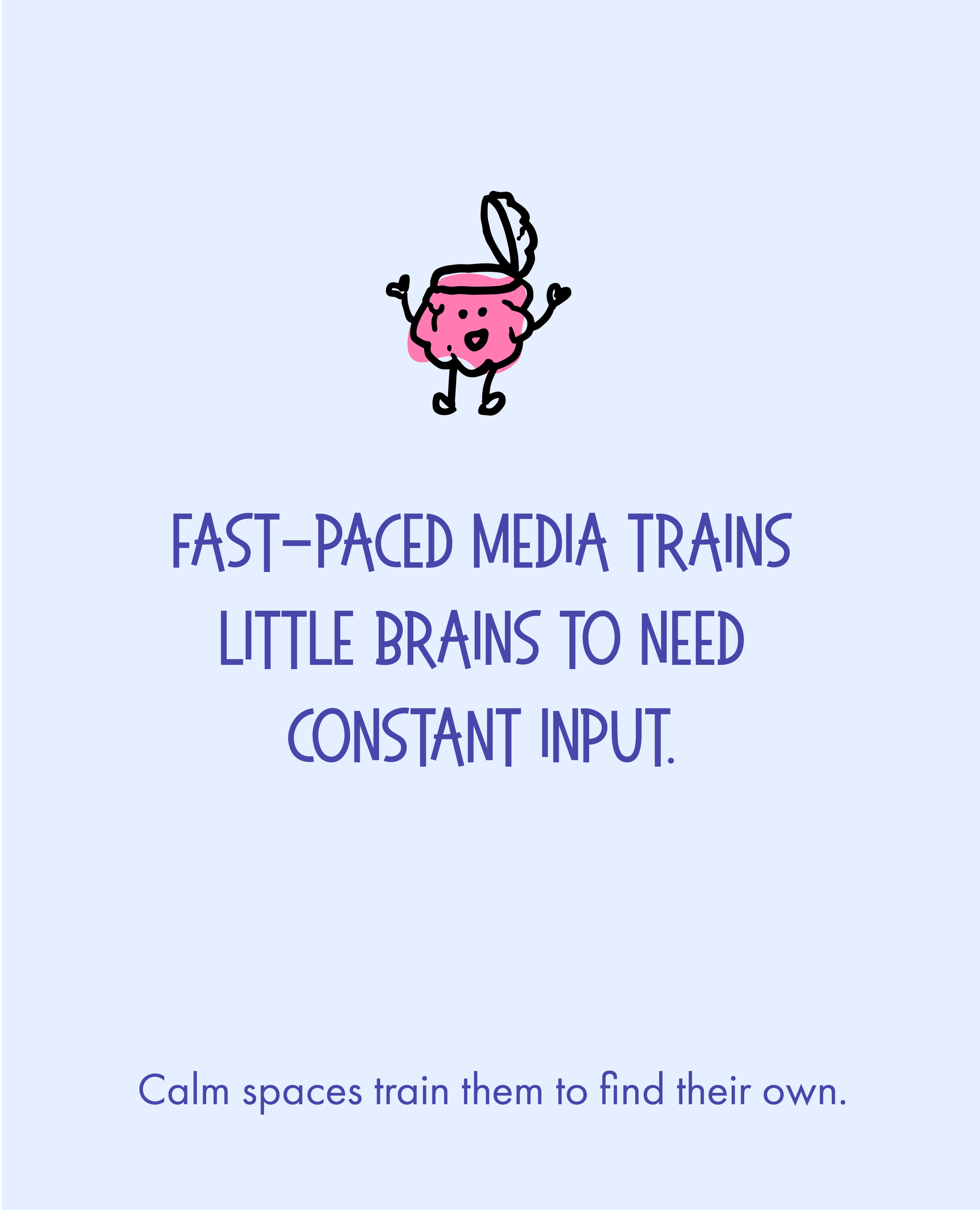
This campaign doesn't ask parents to do more. It asks them to see differently.
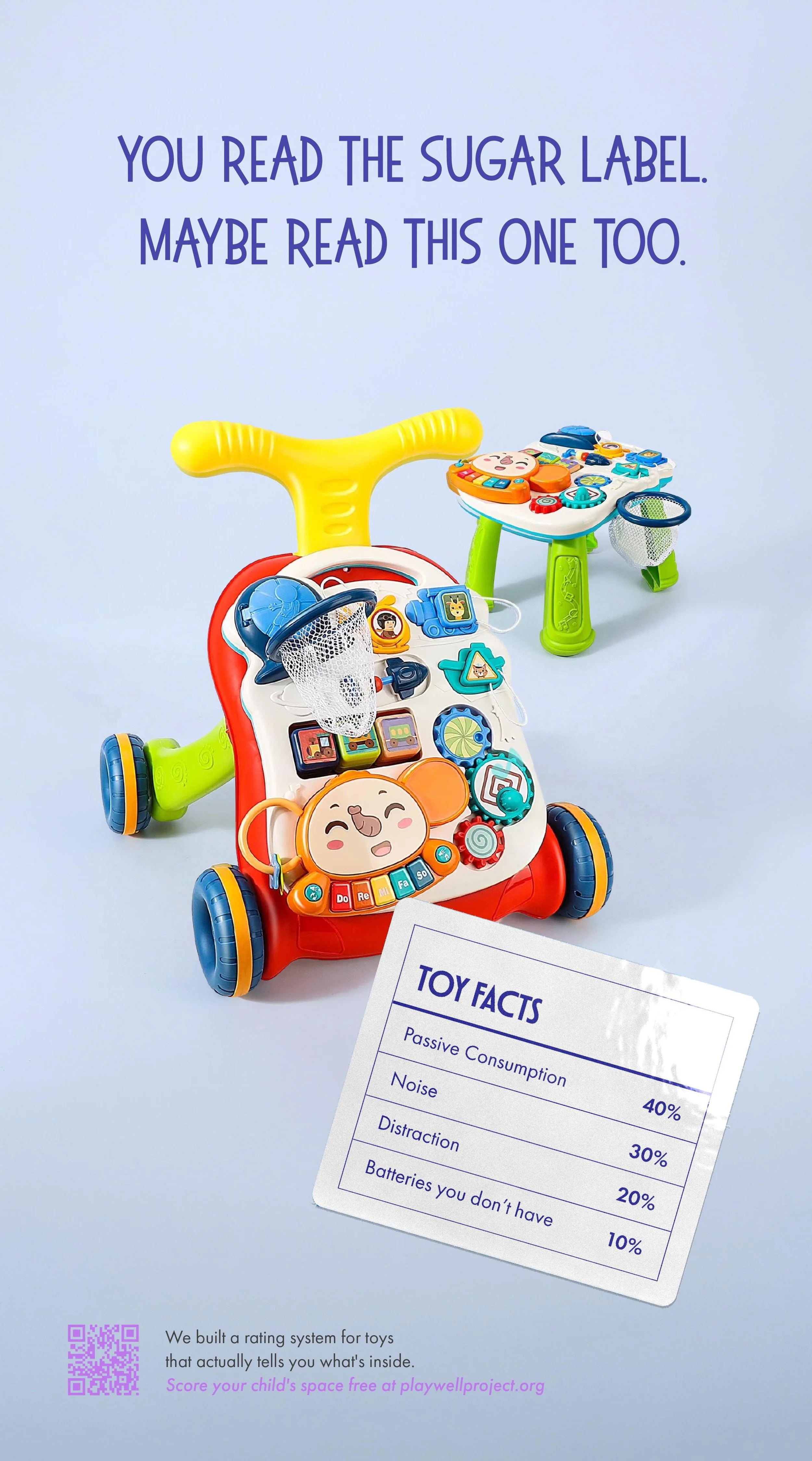
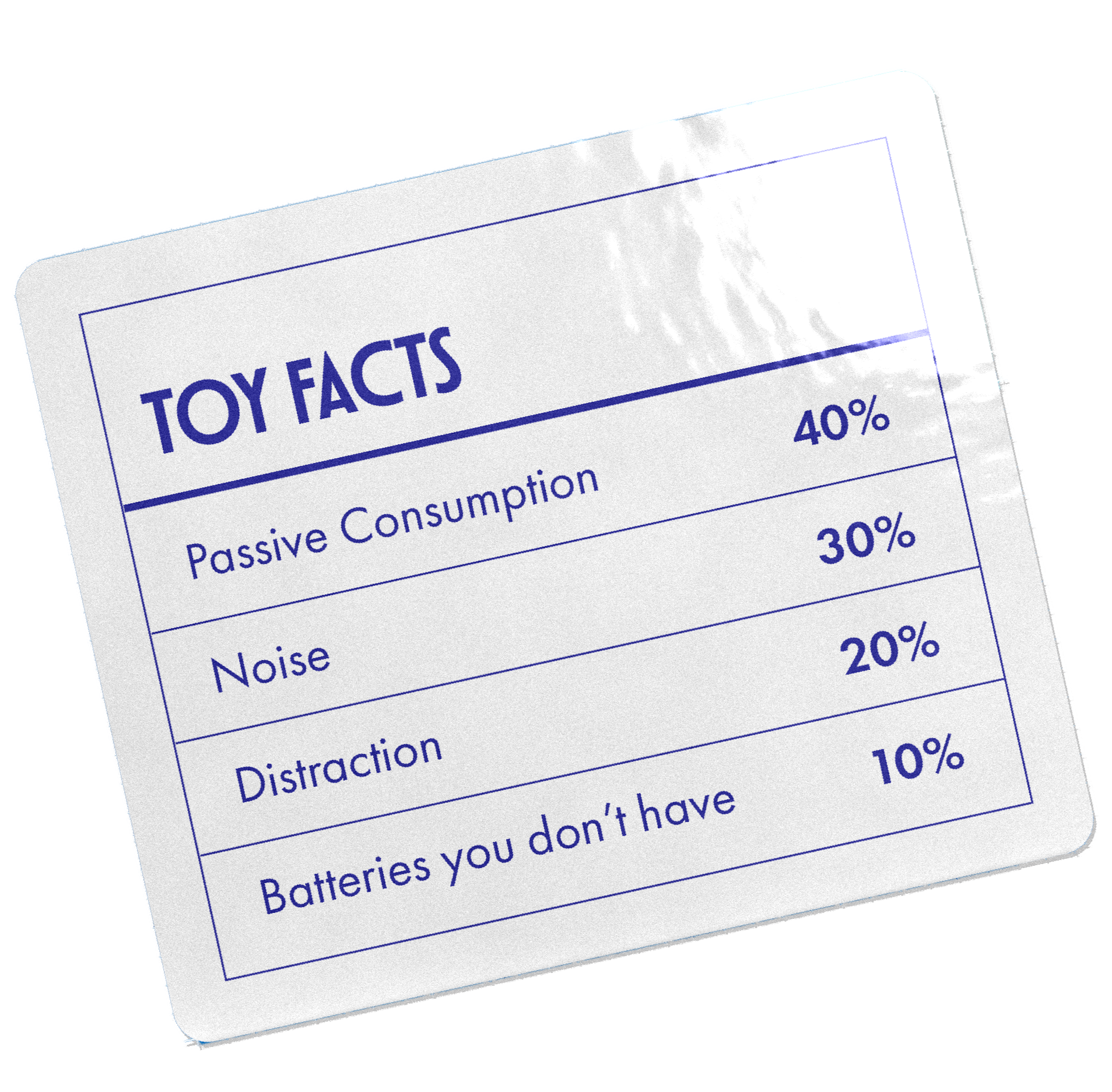
Two things they already understand — nutrition labels and the value of boredom — become a lens. A way to make overstimulation visible, measurable, and fixable.
The Stimulation Score and Pure Play Icon System work like a nutrition label for your child's environment: invisible inputs, made legible. And boredom, long dismissed as a problem to solve, gets reclaimed as the most underrated developmental tool a child has. The loading screen. The white space. The room where imagination actually lives.
-
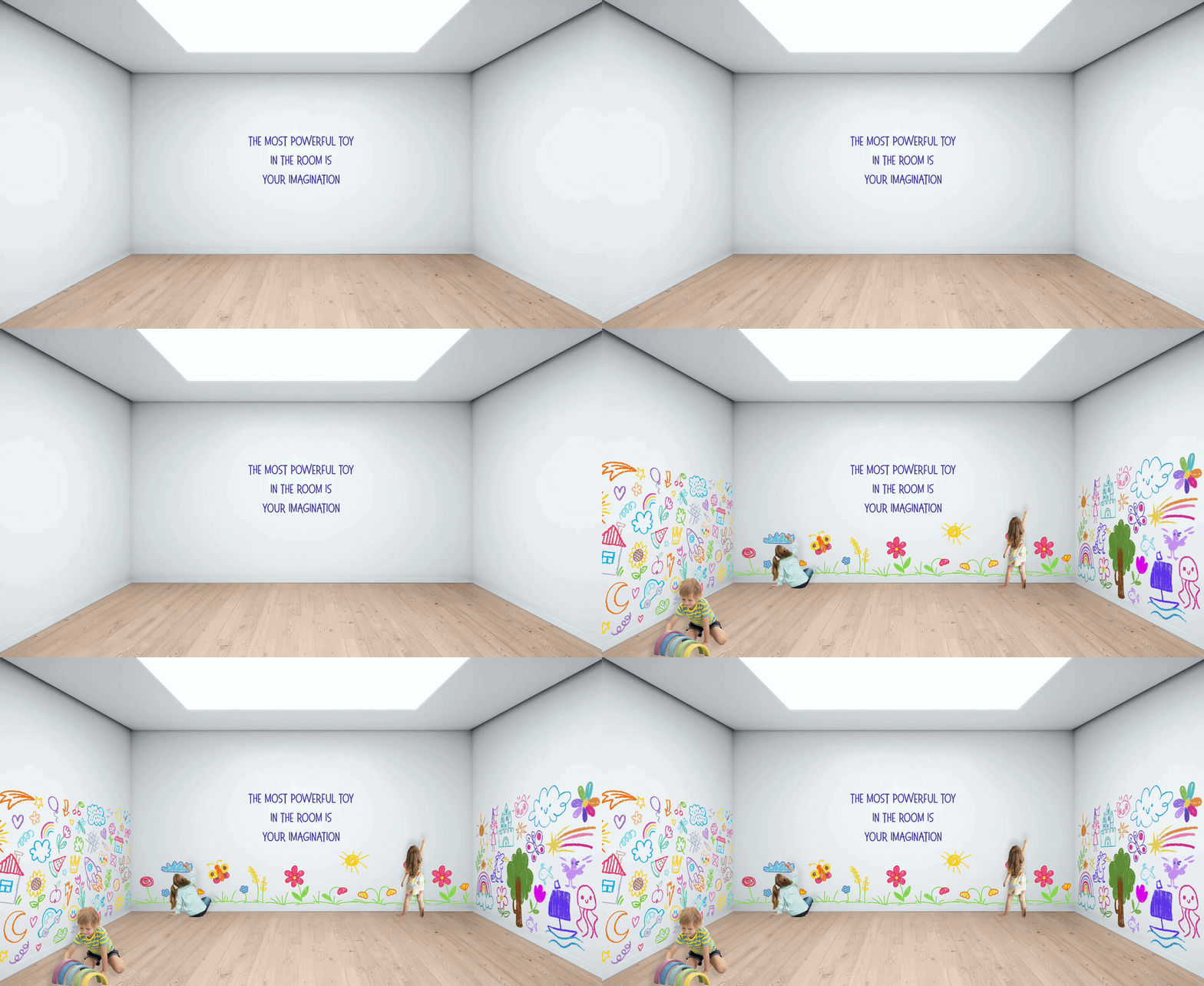
The Imagination Room is a guerrilla-style installation that proves The PlayWell Project’s core message experientially by subverting parent and child expectations.
Pre-event marketing promotes a “free play event” filled with toys, games, and excitement, using colorful, toy-saturated imagery across social media and community spaces to build anticipation.
When families arrive, they enter a completely white room containing only white walls, simple wooden crayons, undecorated cardboard boxes, and natural materials like blocks and fabric scraps, with a single message painted on the wall: “The most powerful toy in the room is your imagination.”
Initial confusion quickly transforms into engaged, creative play as children naturally begin drawing, This installation serves as both proof of concept and PR amplifier, generating social media content #TheImaginationRoom, press coverage, and tangible evidence that children don’t need more—they need less, better, and room to imagine.
Brand Activation