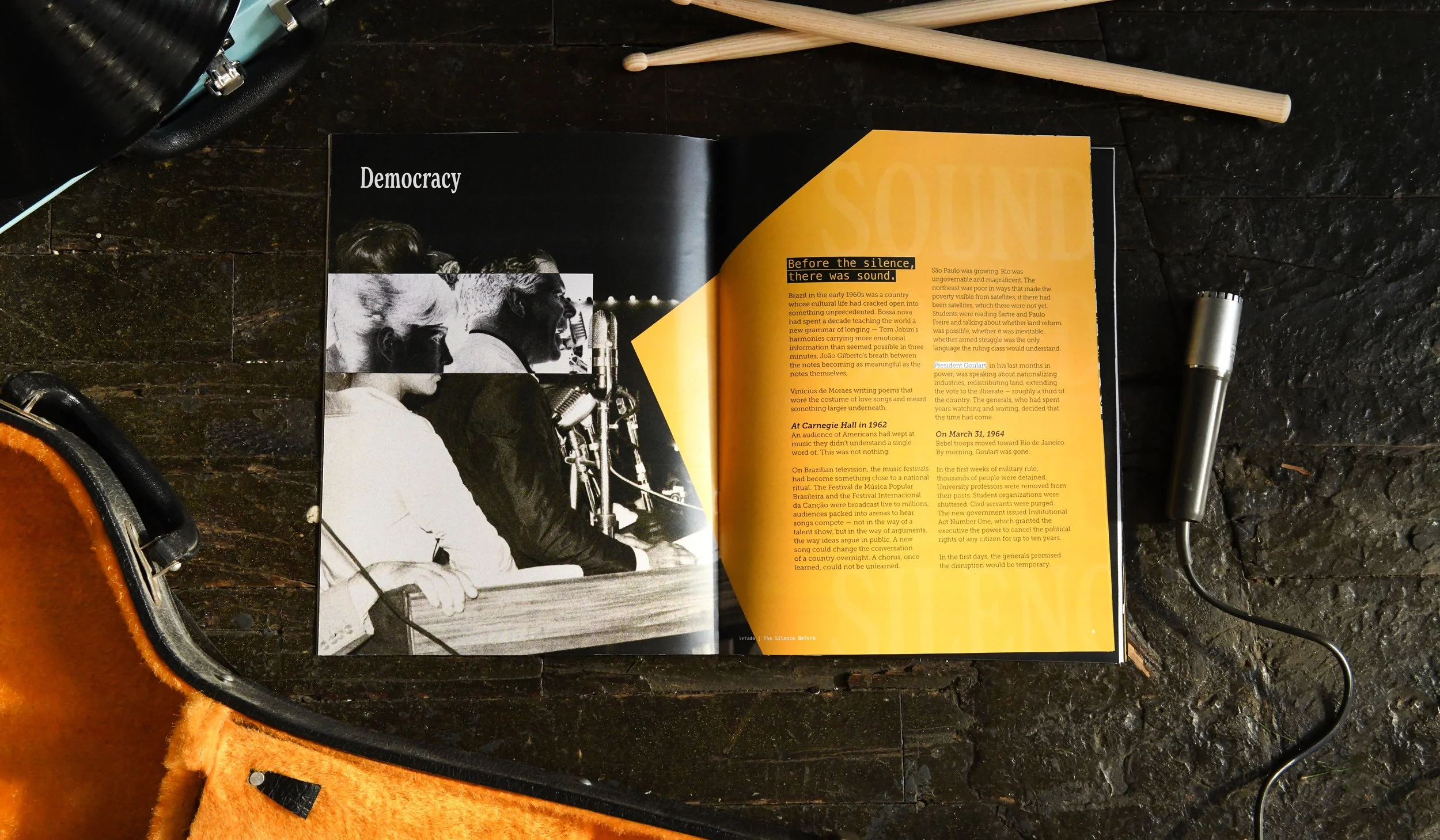
They weaponized melody.
History & Culture + Publication
Overview
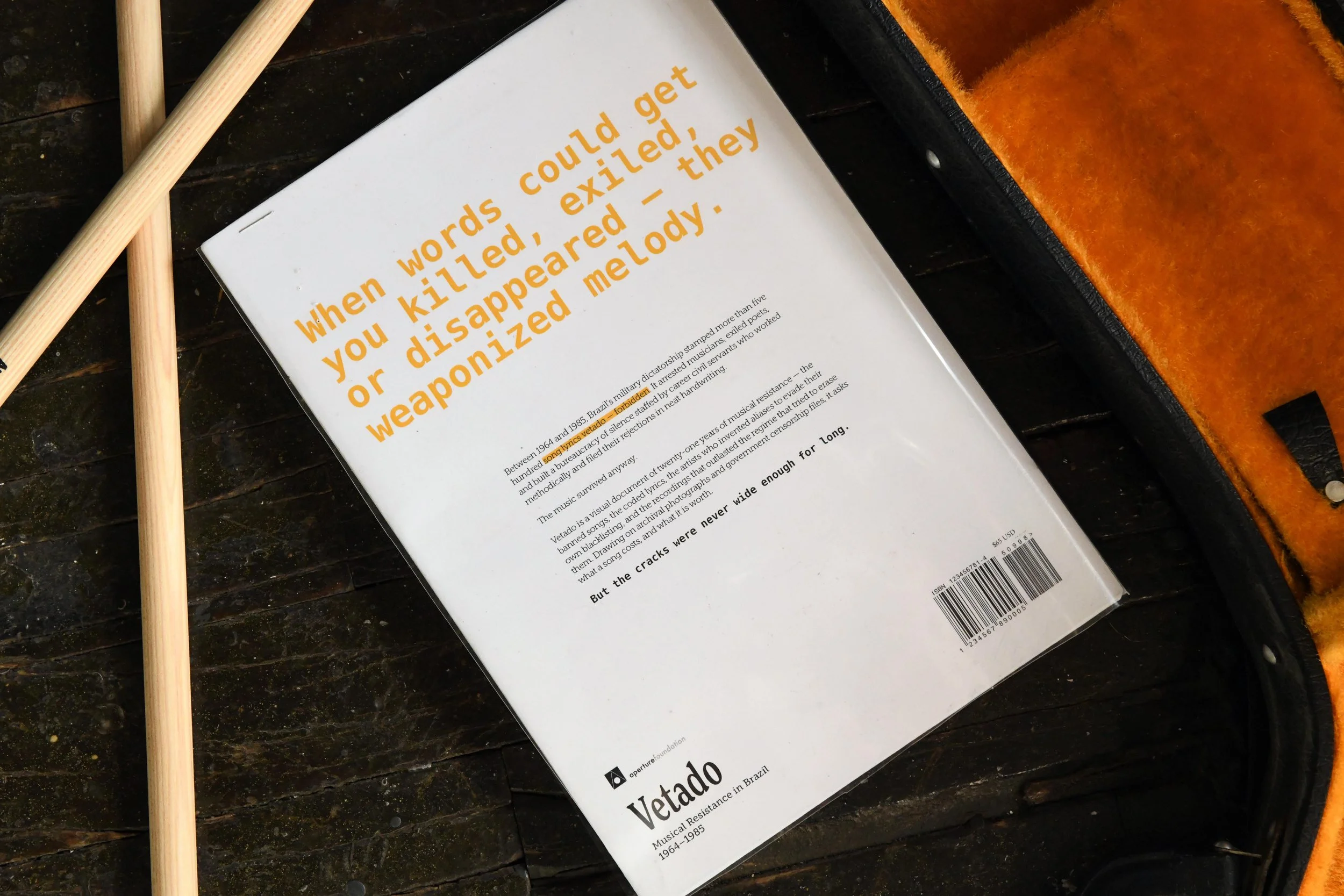
Vetado explores protest music during Brazil’s military dictatorship (1964–1985), when censorship transformed music into coded resistance. Through archival censorship documents, four landmark songs, and lyric analysis, the book reveals how artists used metaphor and ambiguity to resist authoritarian control, reframing censorship not as silence, but as a force that intensified sound.
Scope
+ concept + art direction
+ naming + copywriting
+ research + creative strategy
+ publication + collateral
-
One of the most sophisticated bodies of protest music ever made exists almost entirely outside public consciousness. The songs are on Spotify. The history is behind paywalls. The documents are in the Arquivo Nacional. None of it is talking to each other, and without the full picture, the music is just music.
-
Censorship doesn't silence sound, it heightens it. The musicians of 1964–1985 didn't make great art despite the dictatorship. They built an entirely new creative vocabulary because of it. Metaphor became method. Melody became message. The gap between what was written and what was heard isn't a footnote to Brazilian music history.
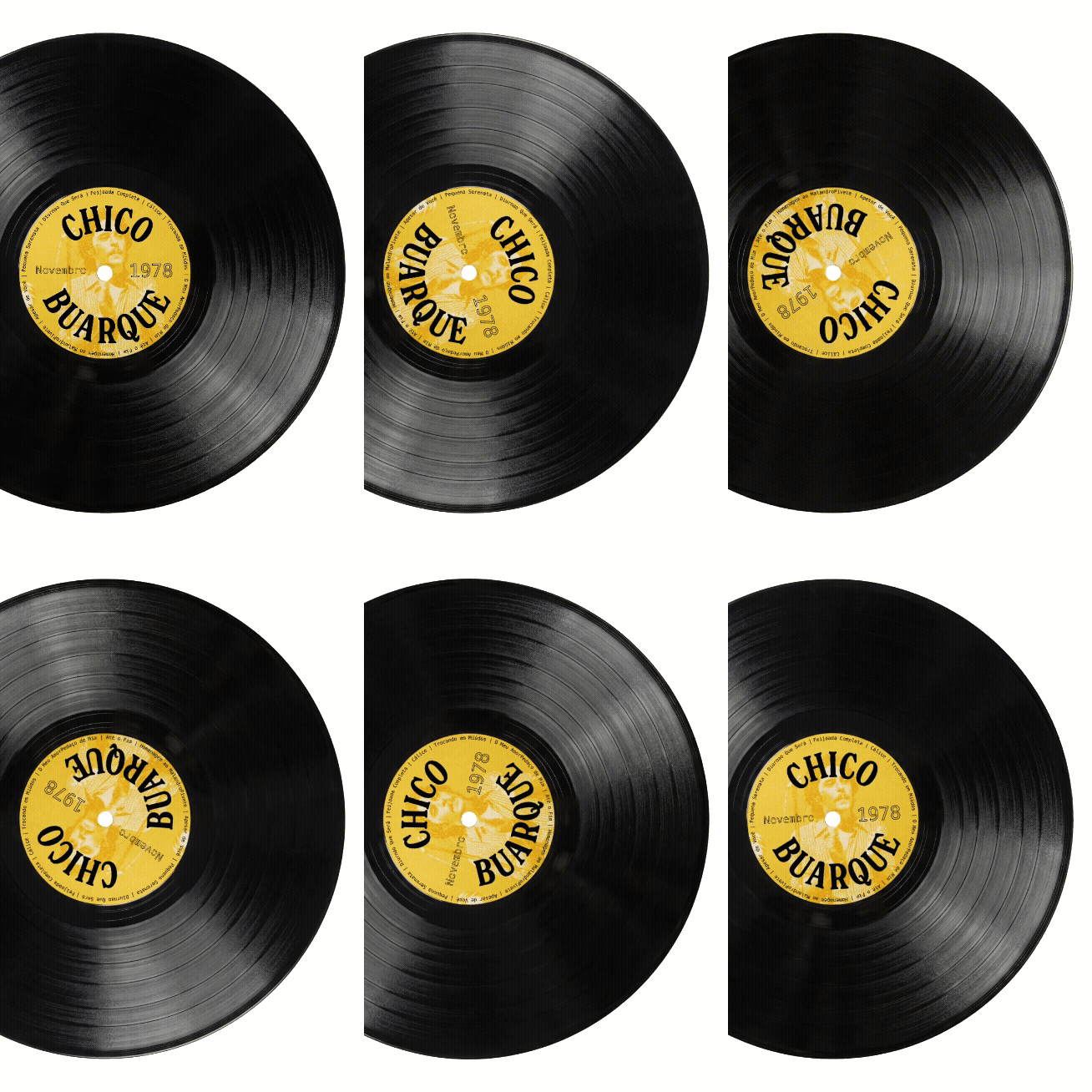
Answer
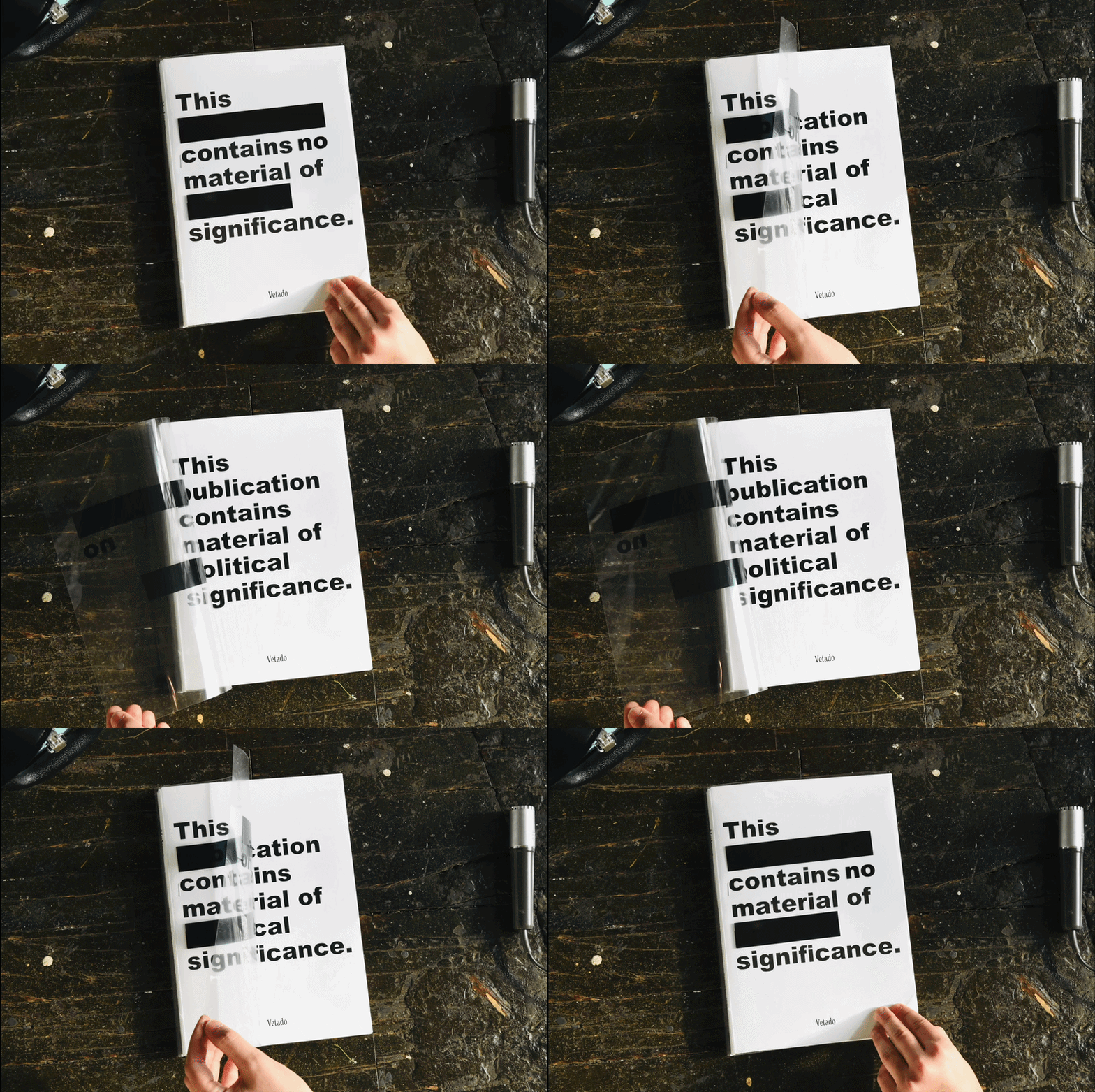
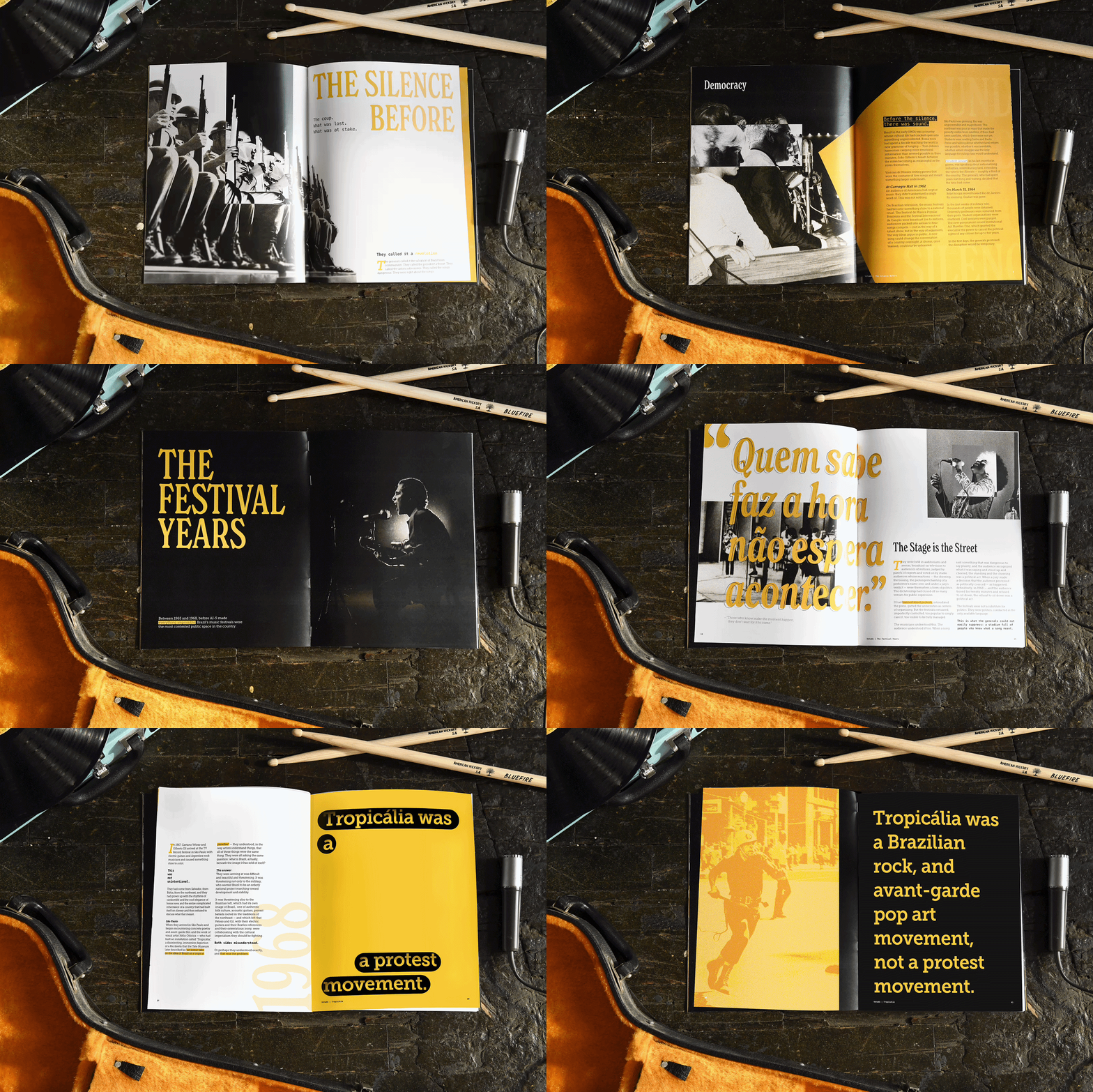
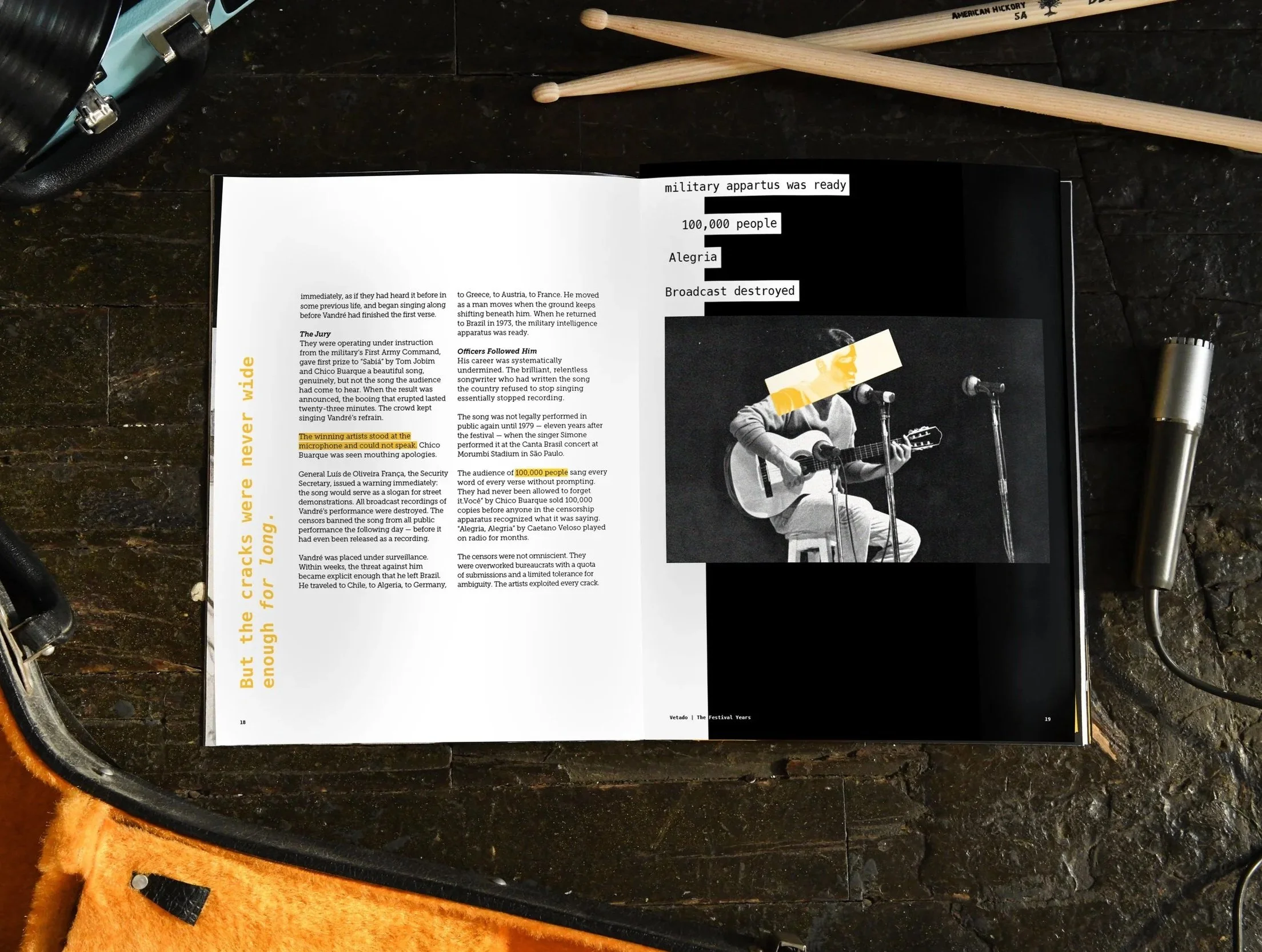
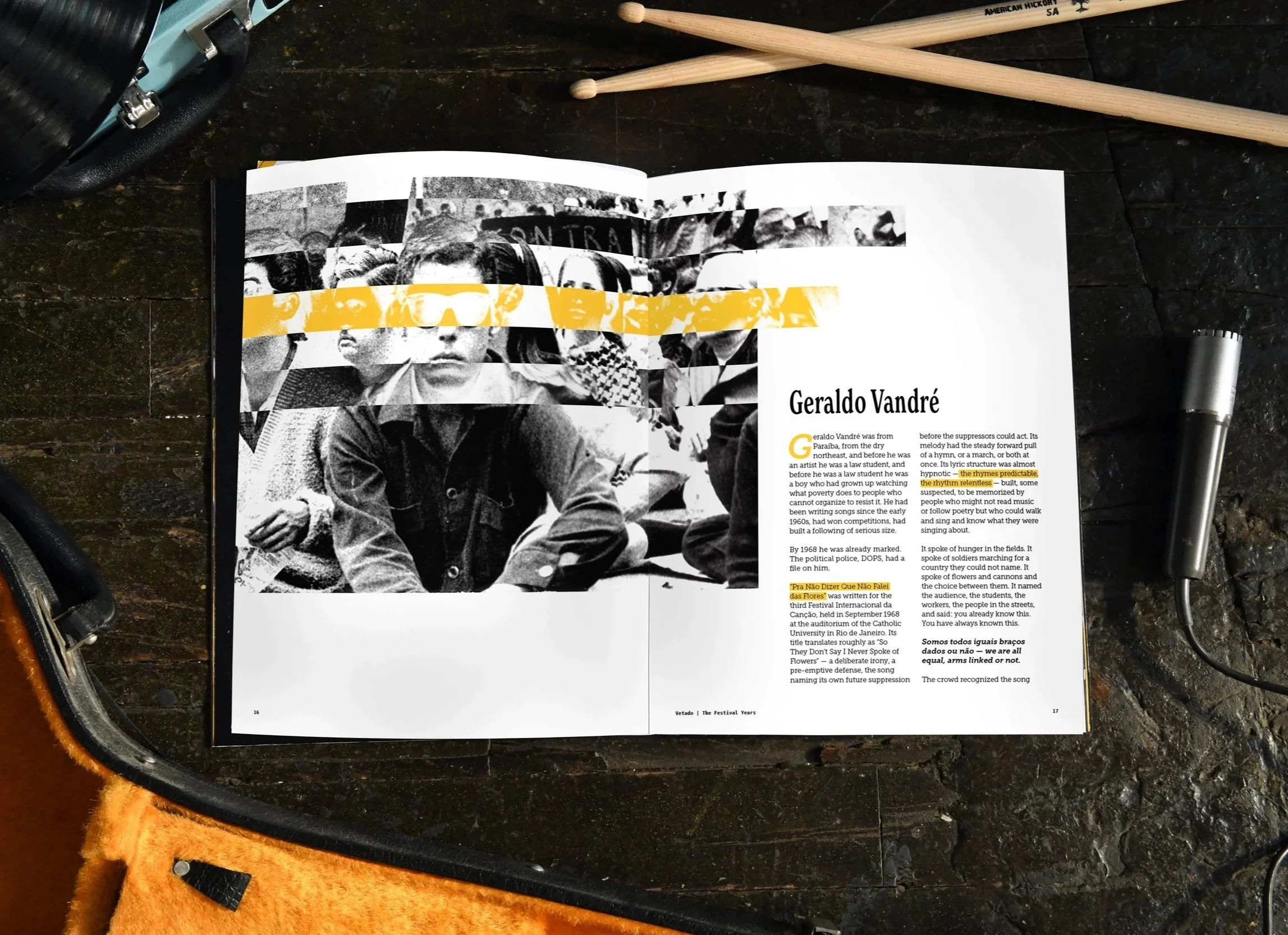
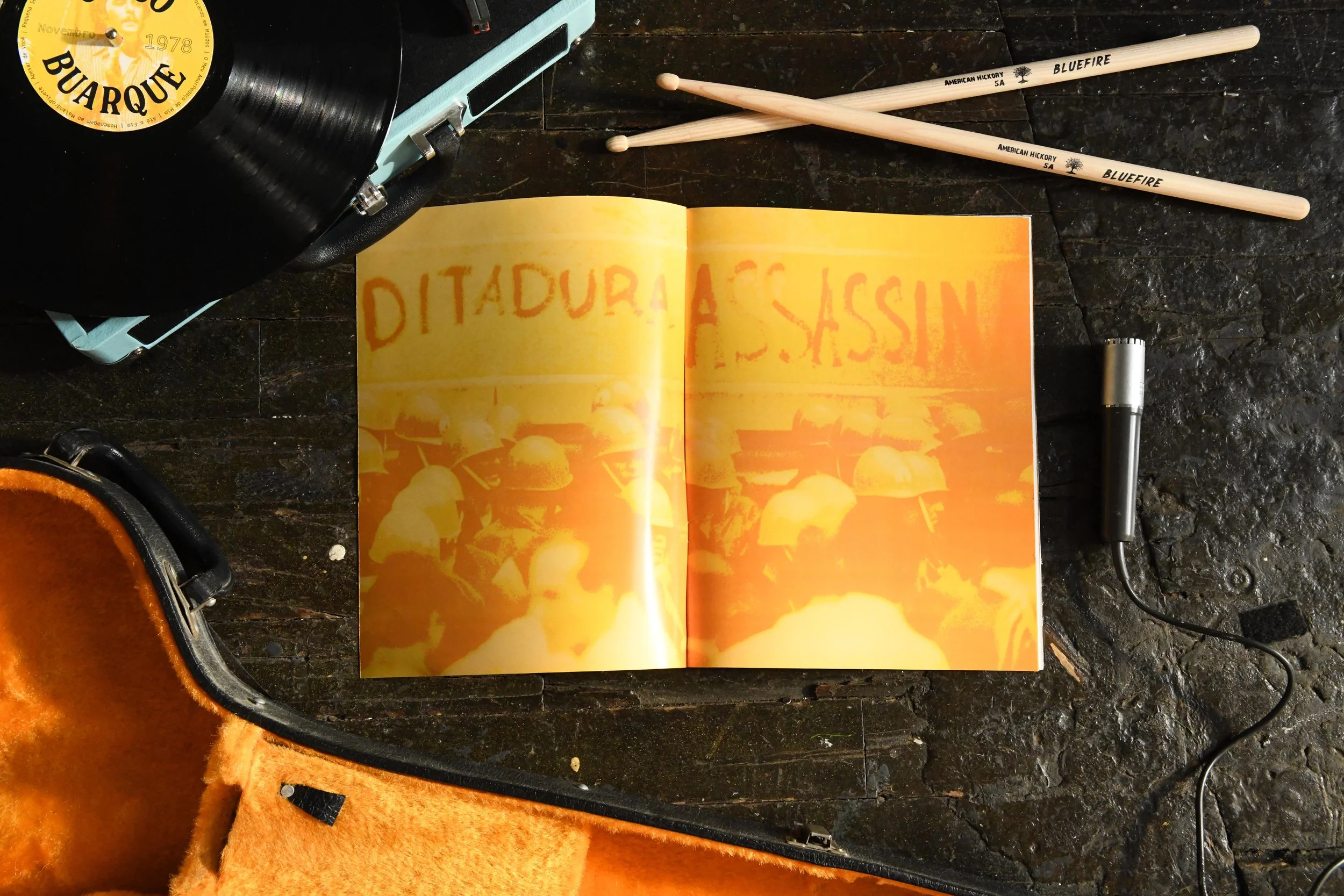
Vetado brings those pieces together for the first time. A publication that uses the regime's own paper trail to decode what the songs were actually saying, original DCDP submissions, side-by-side lyric analysis, and the six methods of resistance that are as urgent now as they were then.
A codebook, disguised as a coffee table book.
Advertising Campaign
-
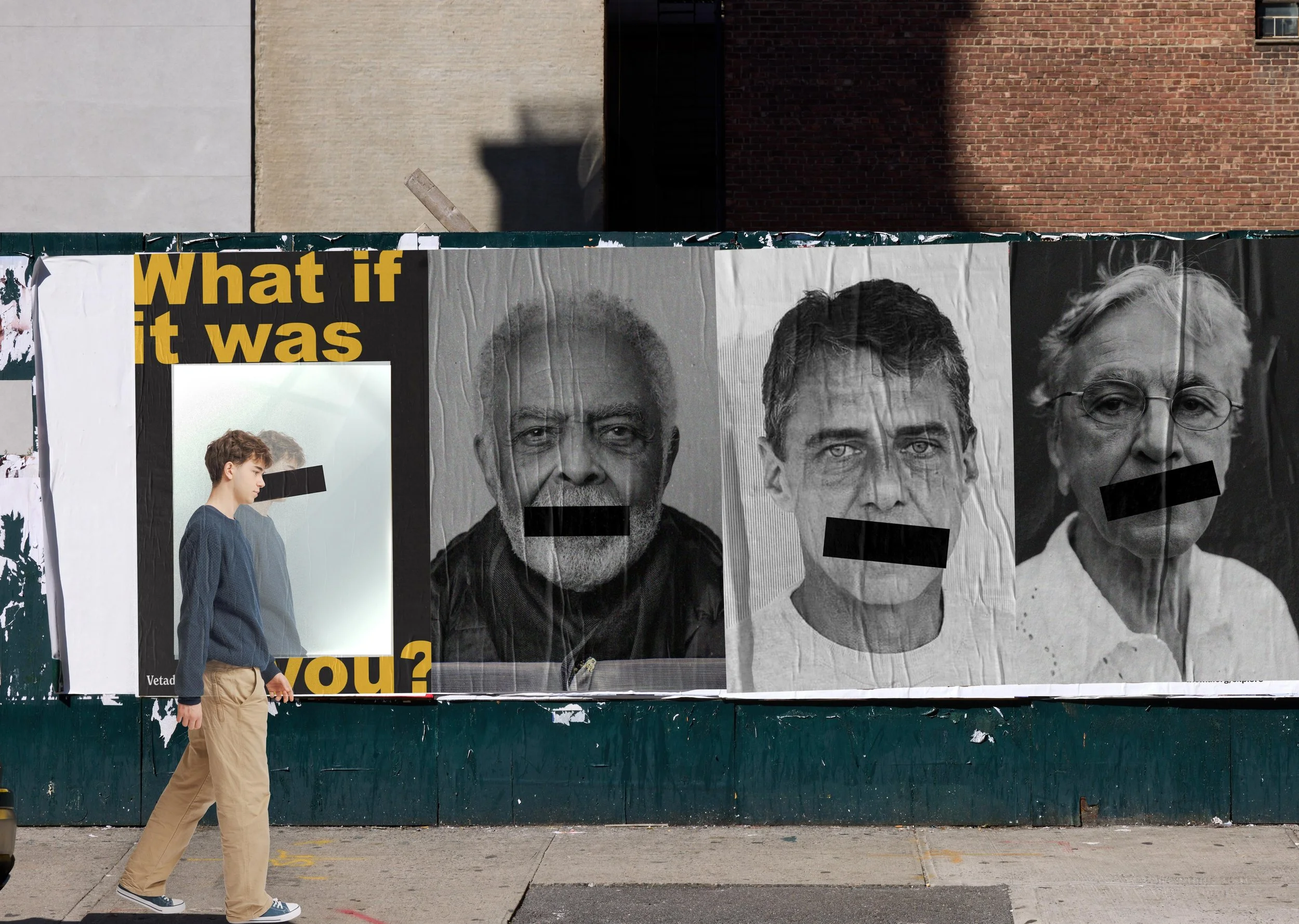
The campaign does not advertise the book directly. It behaves the way the music did: coded, layered, operating on two levels simultaneously.
On the surface it looks like a series of redactions. Underneath, it is a message to anyone living under a government that is telling them to be quiet.
The book is positioned not as a history of Brazil but as a manual — a codebook of resistance tactics that has been hiding in plain sight for fifty years, disguised as a coffee table book about music. The campaign makes that positioning explicit without stating it. It shows the method by using the method.
Illuminating Redaction
What if it was you?
The panels ask, “What if it was you?”—placing the viewer in the frame beside silenced Brazilian musicians. It connects past censorship to the present, showing how resistance moved into music when speech was suppressed. Vetado isn’t just history; it’s a warning about how silencing happens and whether we notice in time. The bar over the mouth—targeting the voice itself—makes that threat precise and immediate.