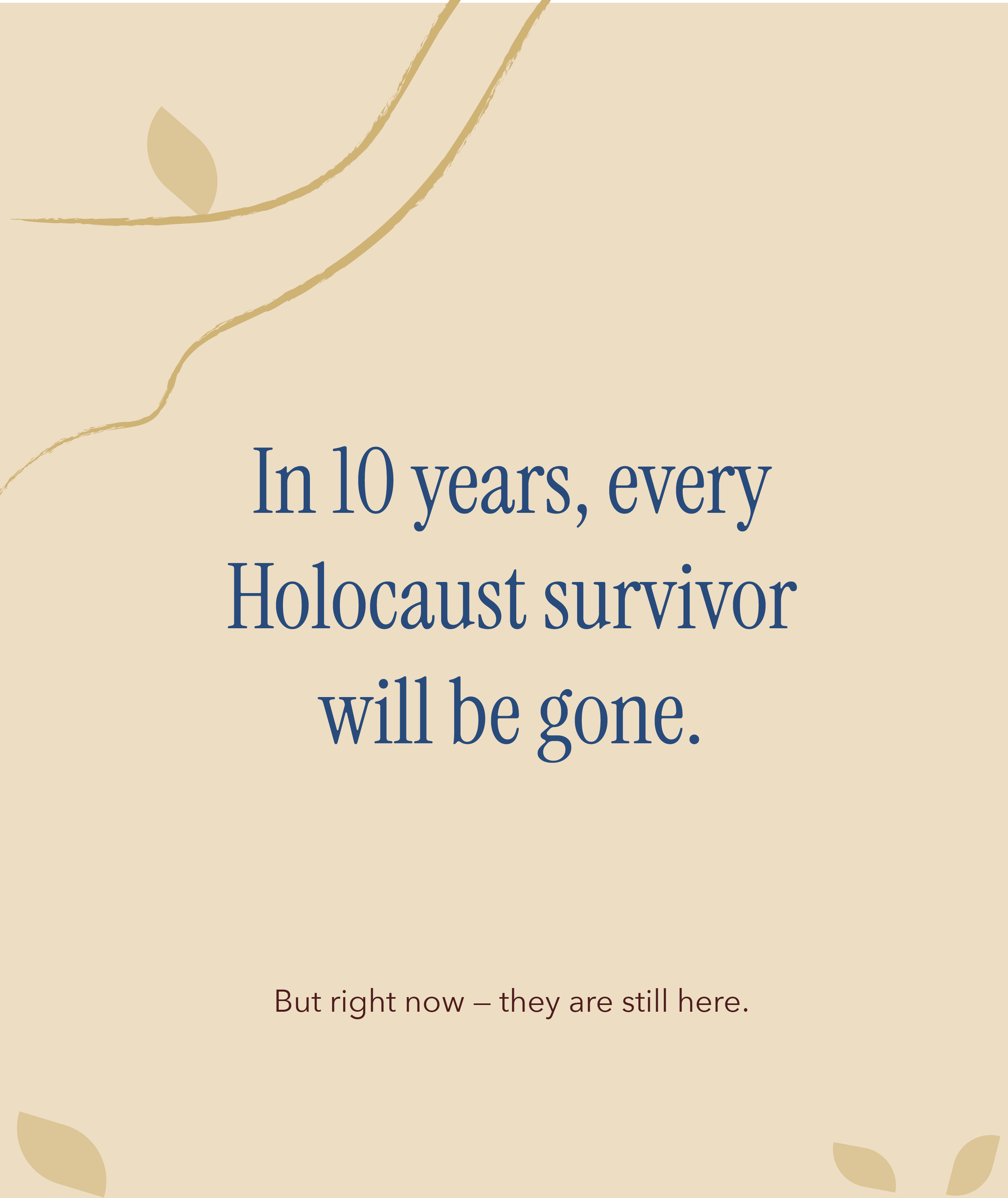
All holocaust survivors will be gone in 10 years.
Design for Good + Branding
Overview
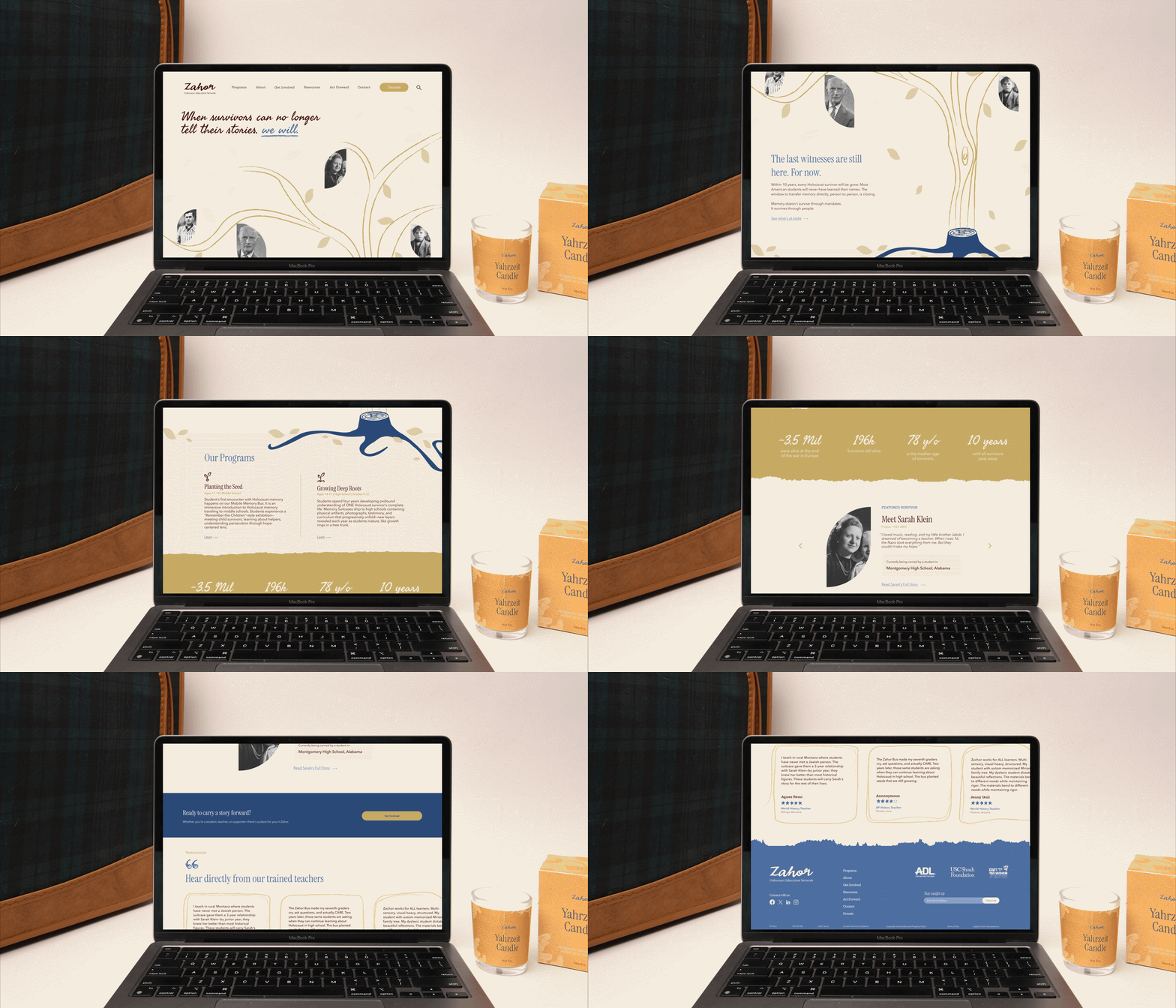
Zahor means "remember" in Hebrew. It's also a mandate — one that's becoming harder to fulfill. Zahor is an intergenerational education system designed to transfer Holocaust memory from the last generation of survivors to the next generation of memory keepers, reaching students in communities that have never had access.
Scope
+ concept + brand identity
+ naming + copywriting
+ research + creative strategy
+ collateral. + storytelling
-
Within 10 years, every Holocaust survivor will be gone. The systems meant to carry that memory forward are failing. While 29 states mandate Holocaust education, most have no time requirements, no funding, and no accountability. The mandate exists on paper. The infrastructure doesn't.
-
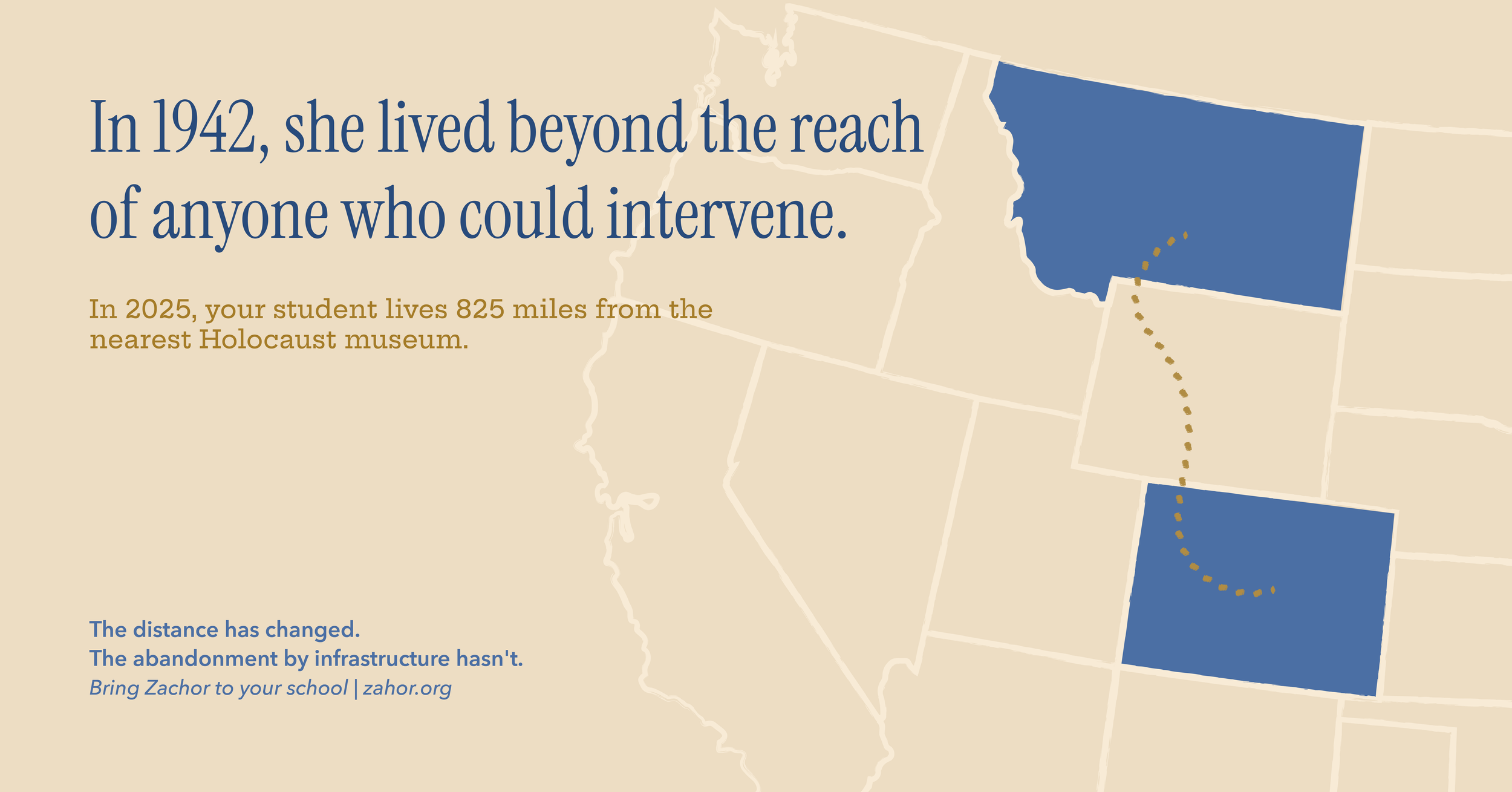
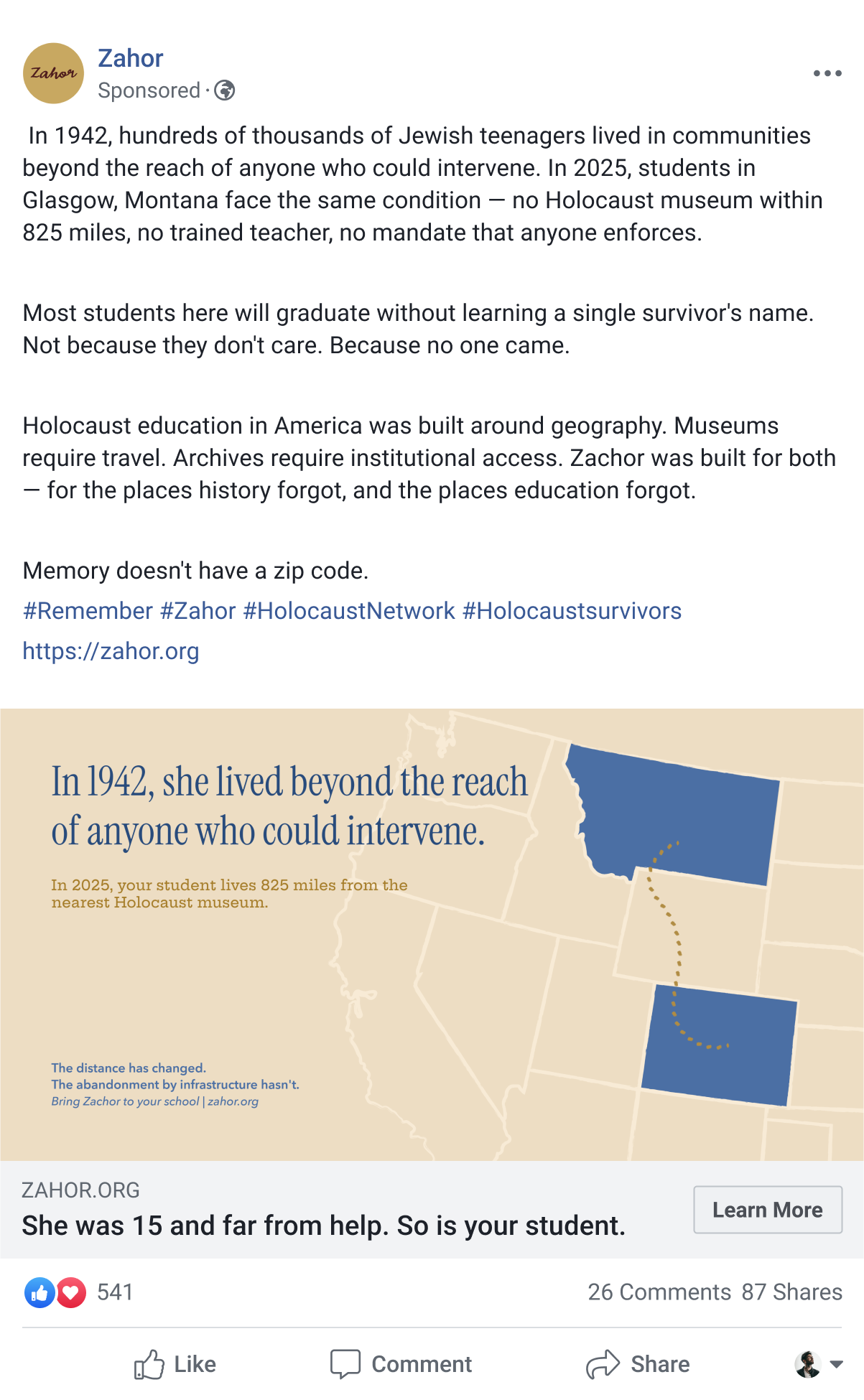
The students who need this most aren't in New York or Los Angeles. They're in Montana, Mississippi, South Dakota — communities with no Jewish population, no nearby museum, no teacher trained for this subject. For these students, Holocaust education has never been a personal story. It's been an abstraction, if it's been anything at all. Museums can't reach them. Archives require institutional access. The clock is running out.
Answer
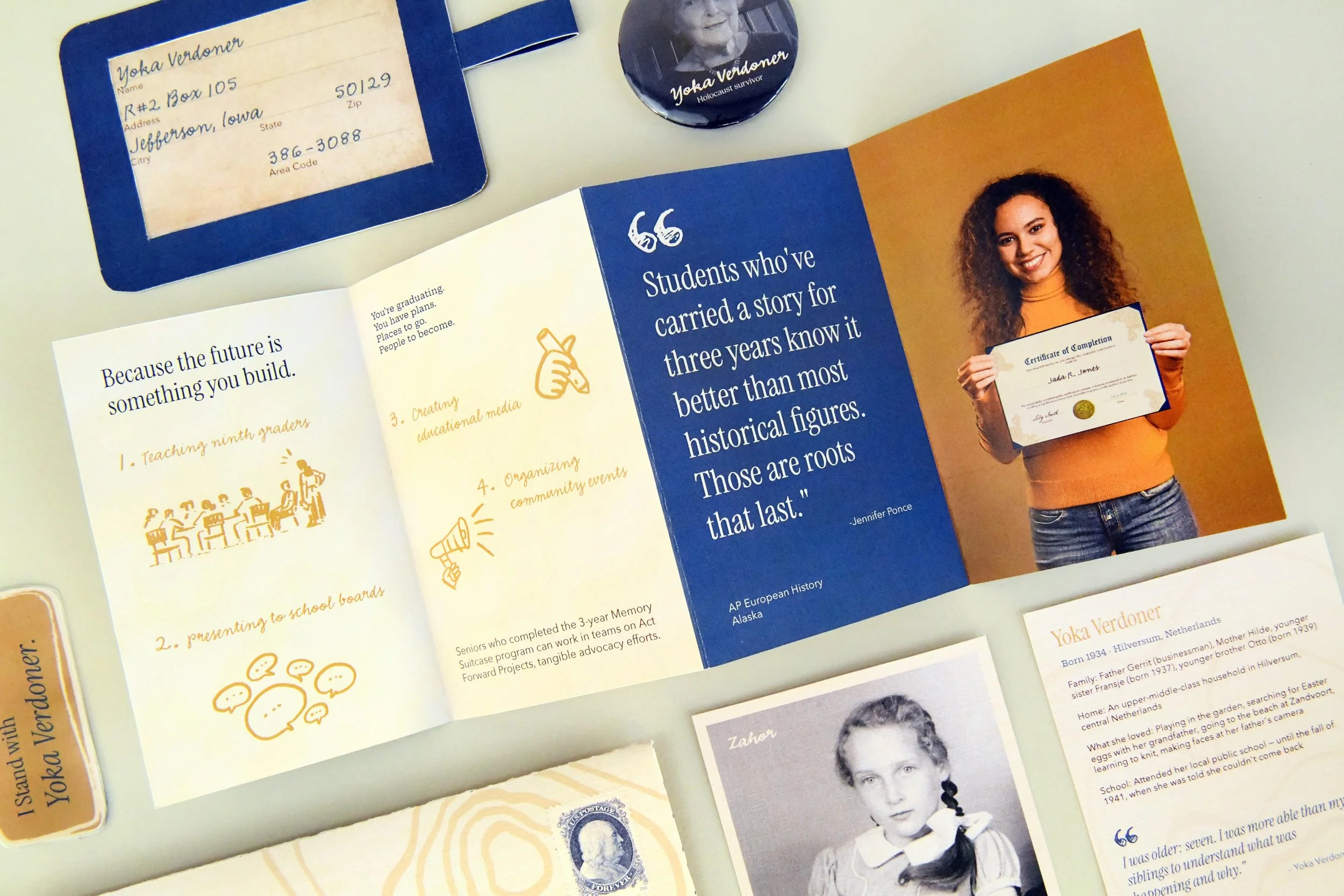
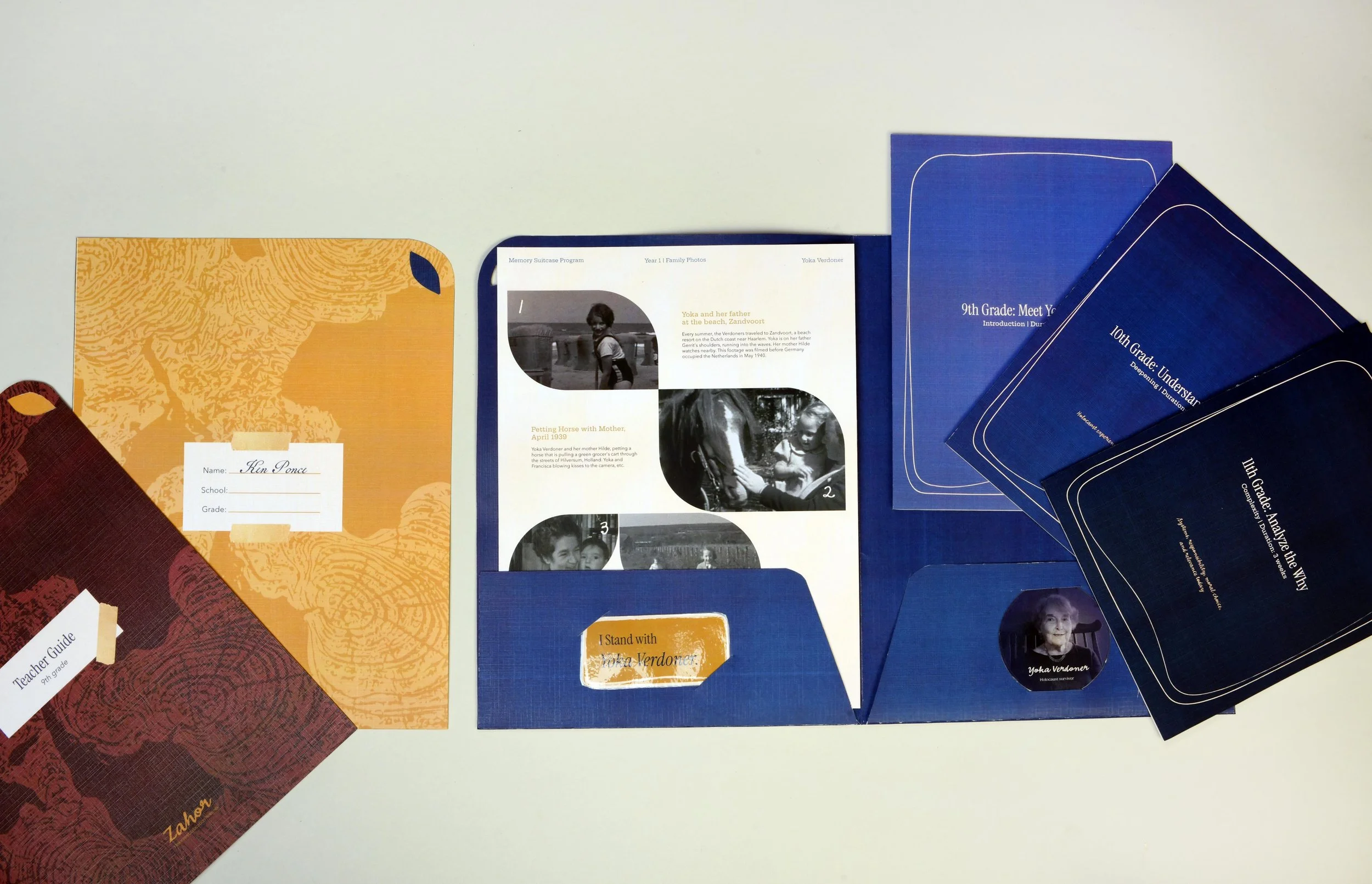
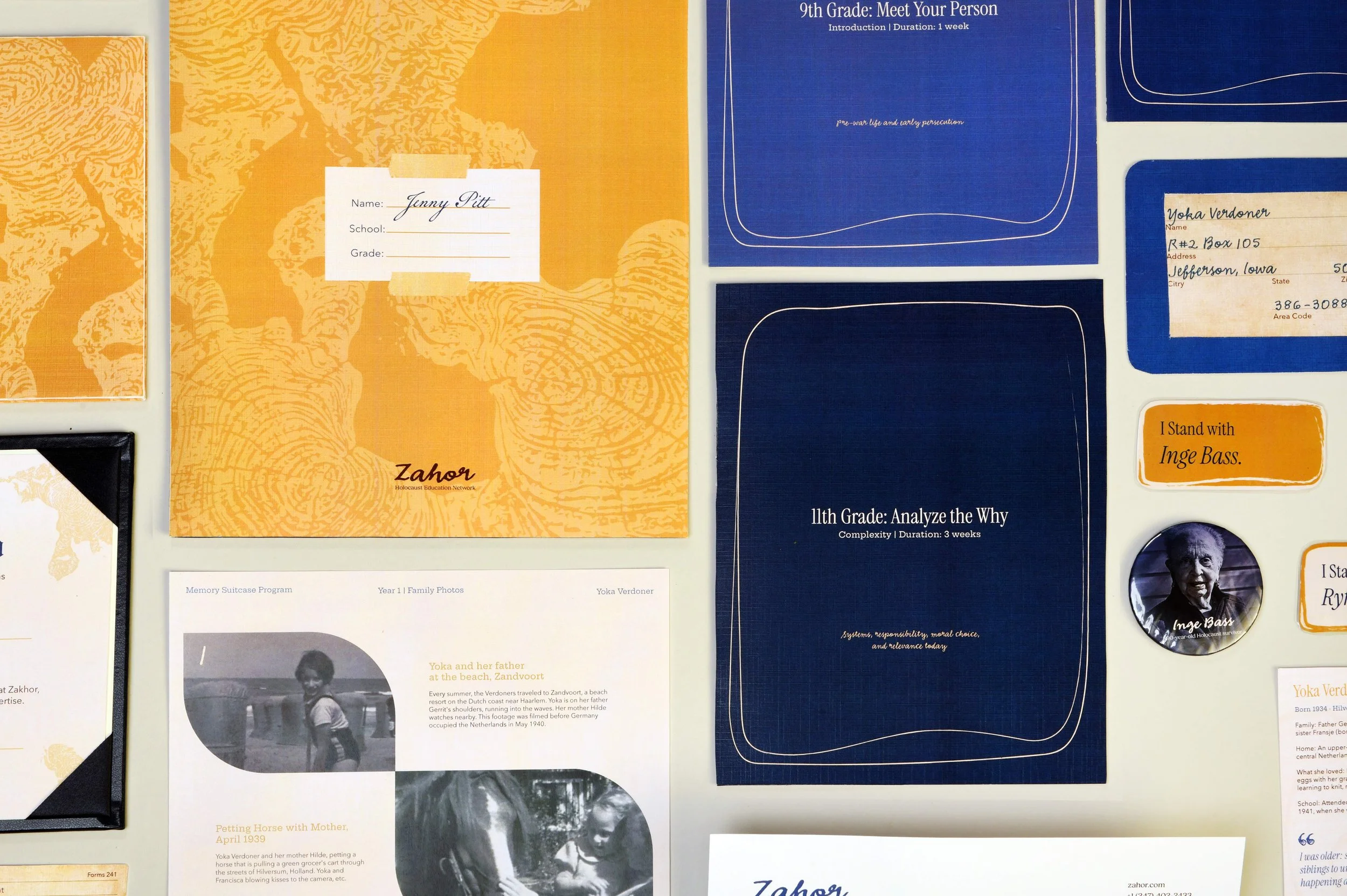
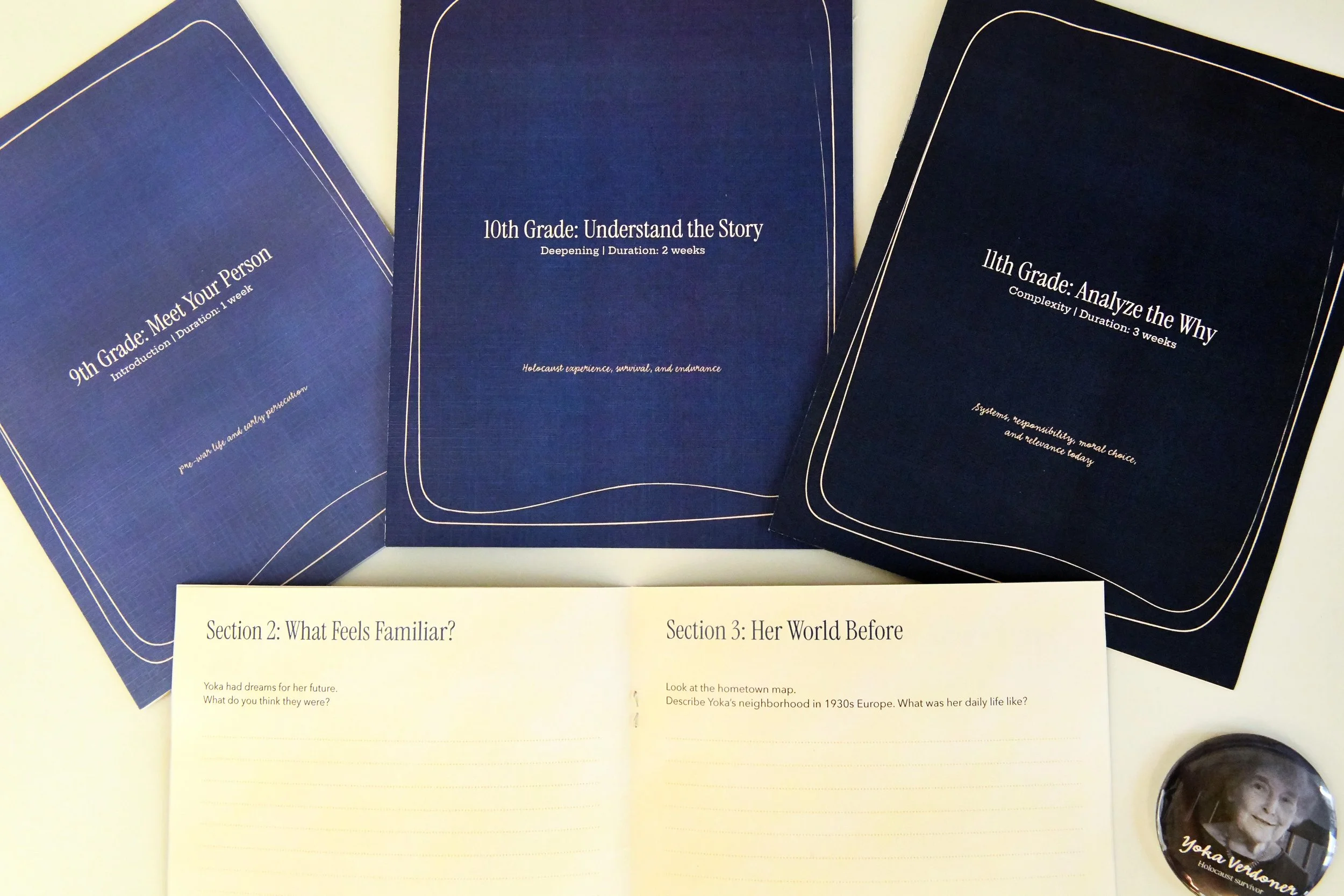
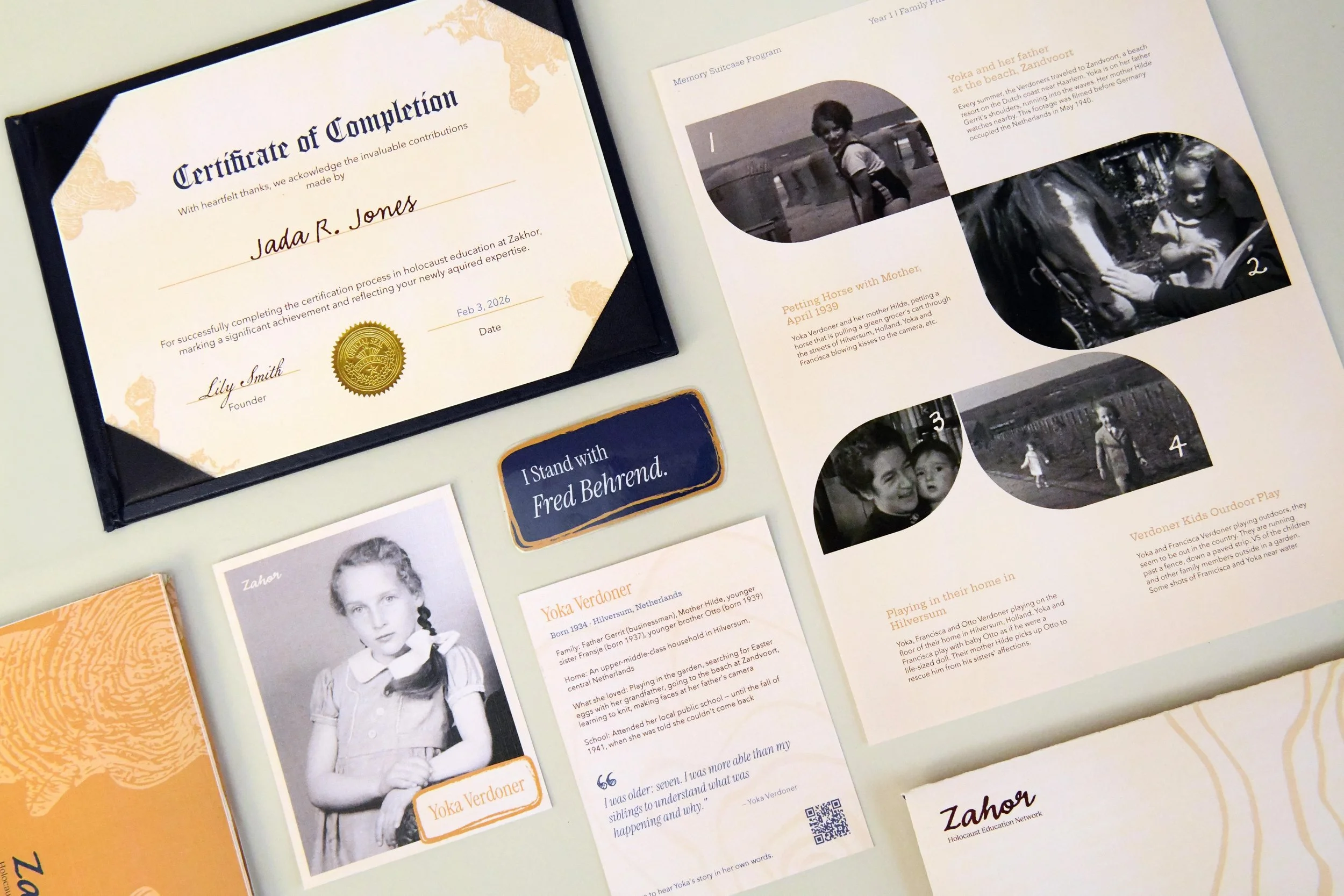
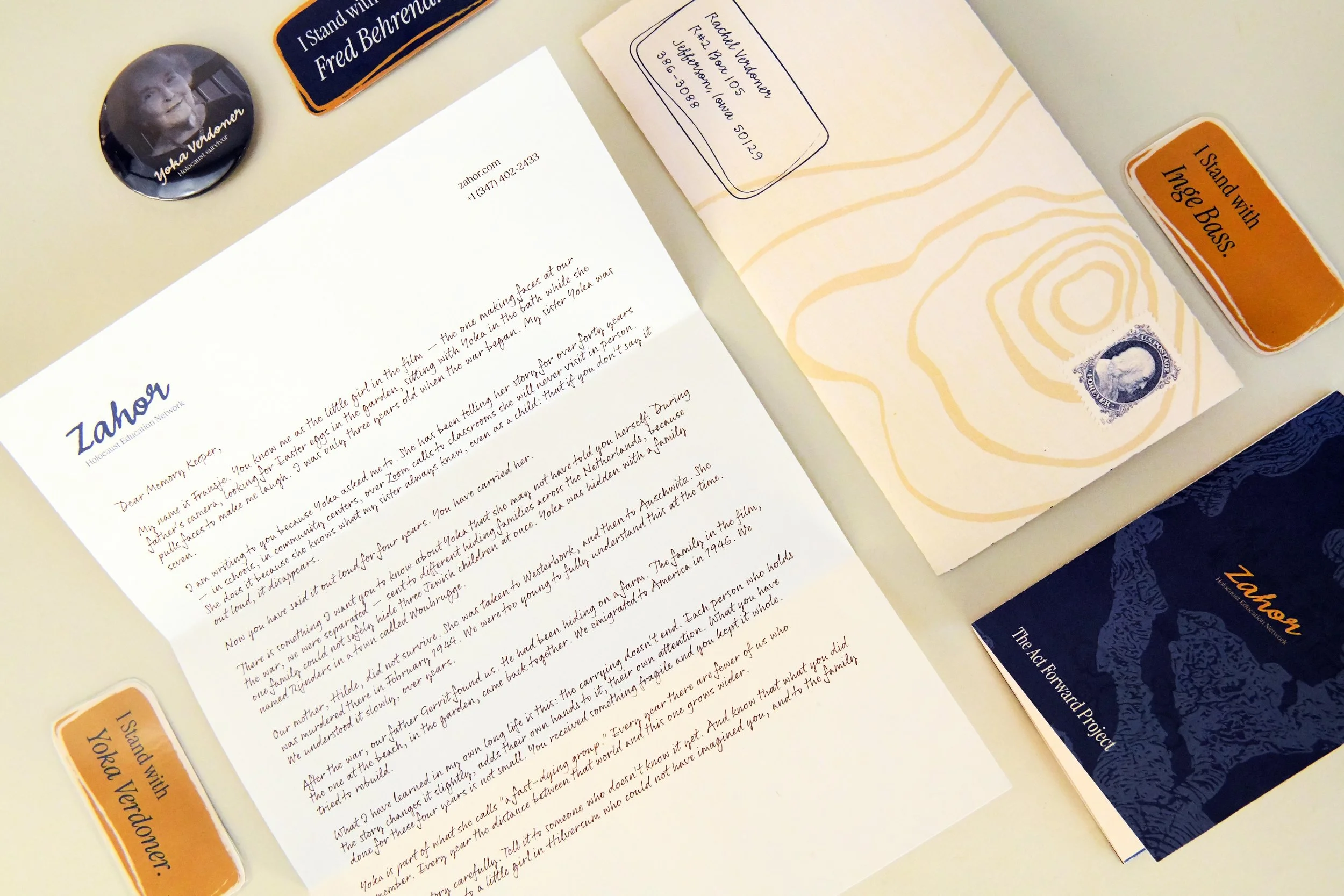
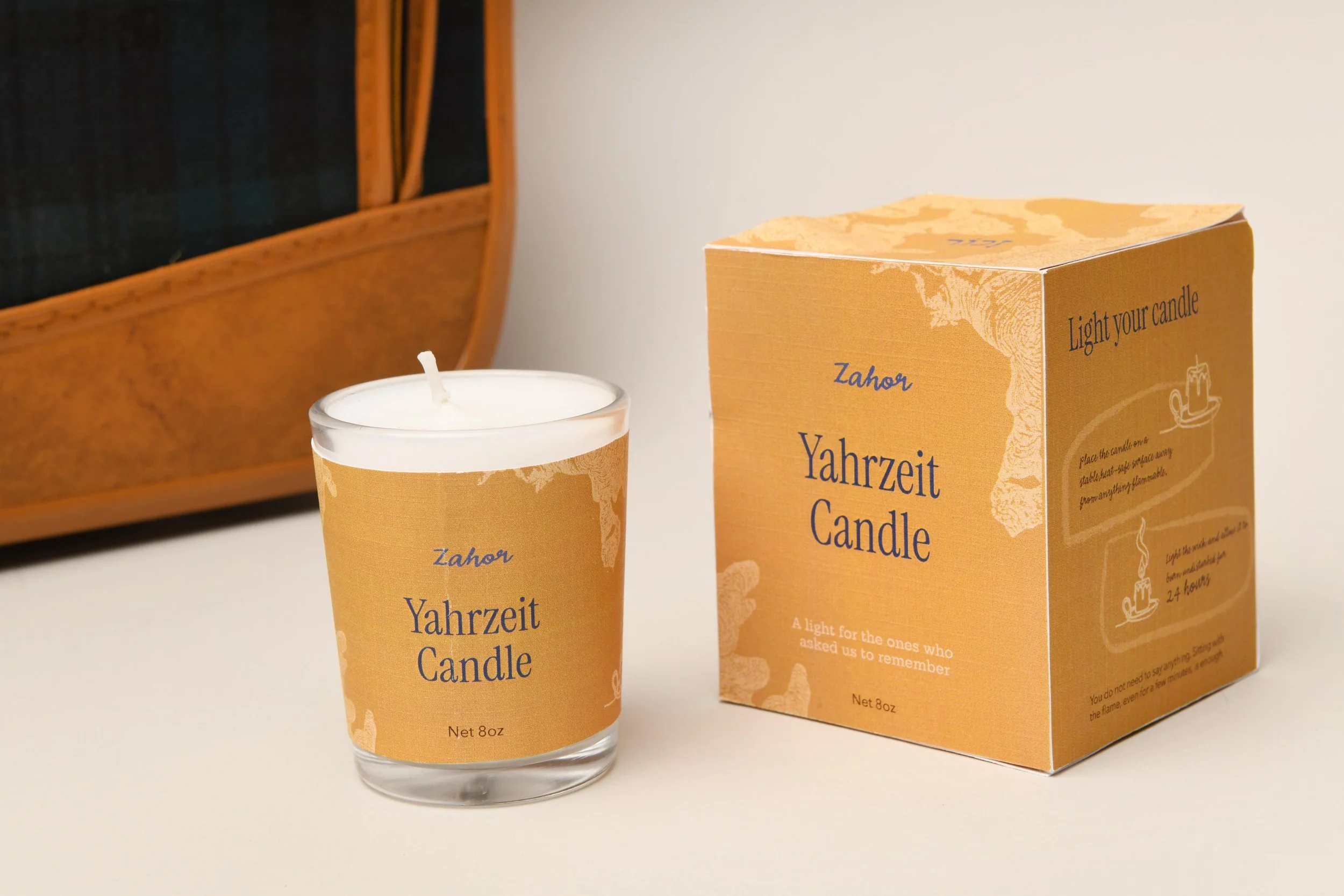
Zachor operates as a two-part intergenerational system. Middle schoolers are introduced to Holocaust memory through the Memory Bus, a mobile, accessible entry point that meets students where they are. High schoolers enter a four-year longitudinal program built around the Survivor Suitcase, deepening from curiosity to advocacy over time, culminating in student-led Act Forward projects.
The brand voice is inclusive, hopeful, and determined — because this is active memory keeping, not passive remembrance.
Advertisement Campaign

-
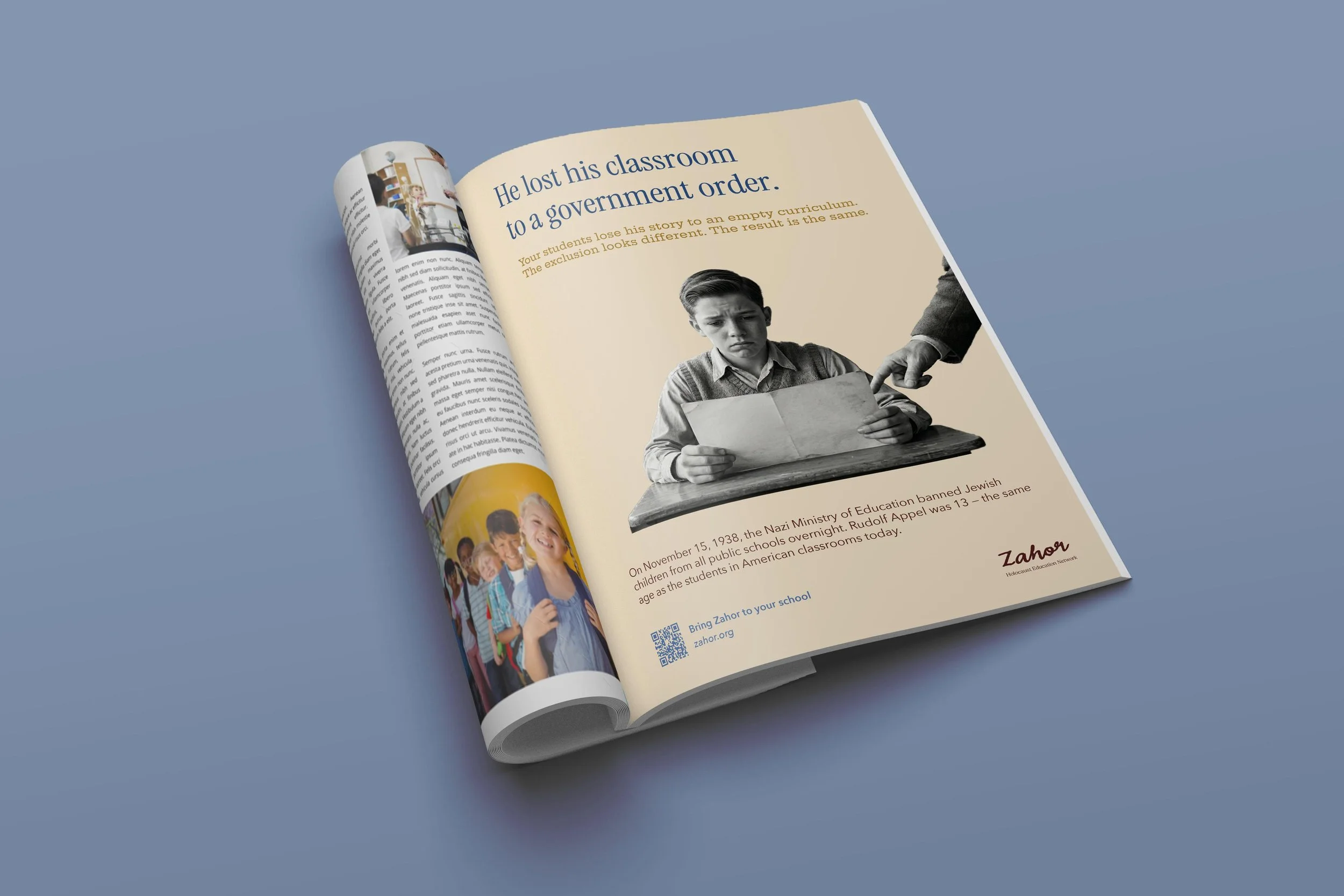
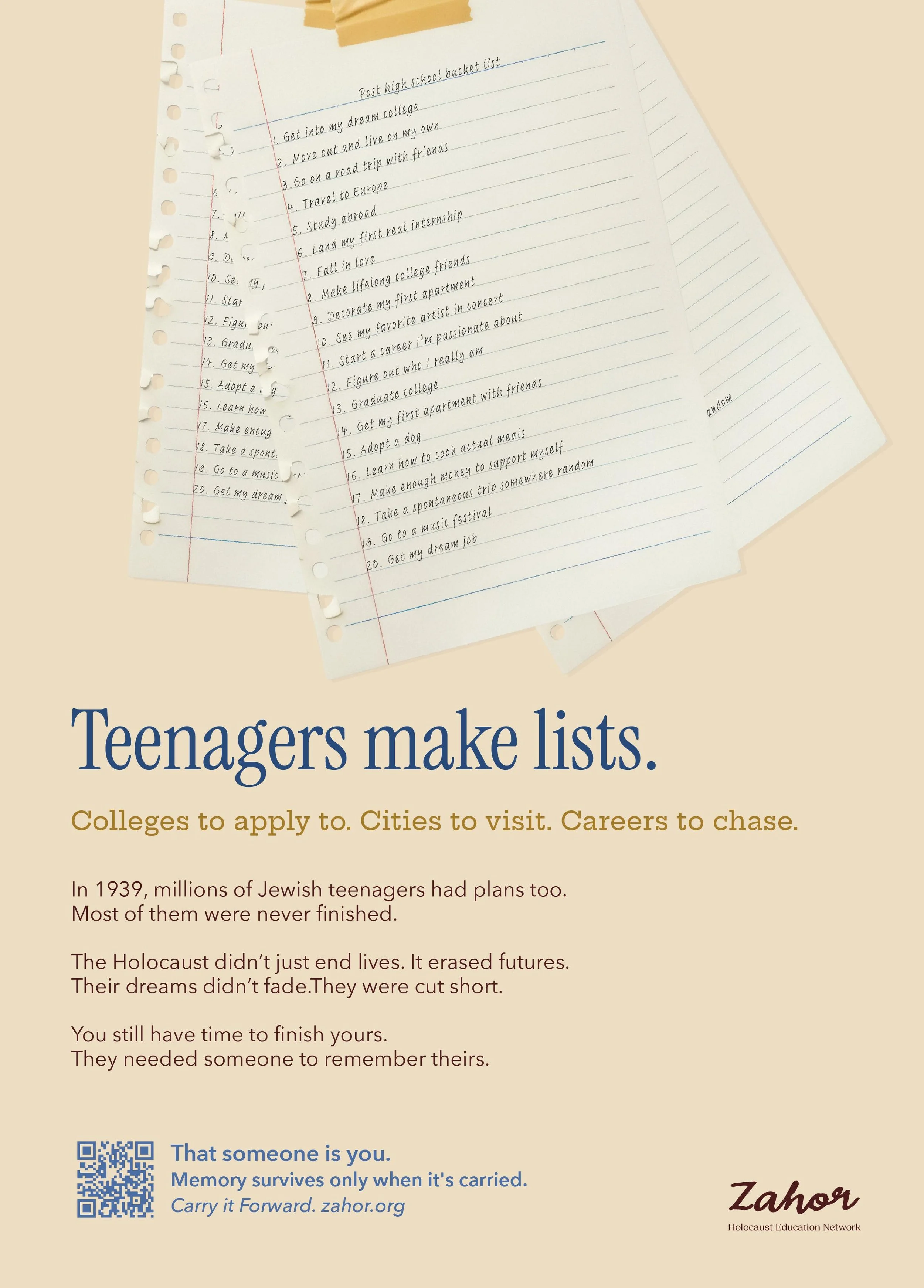
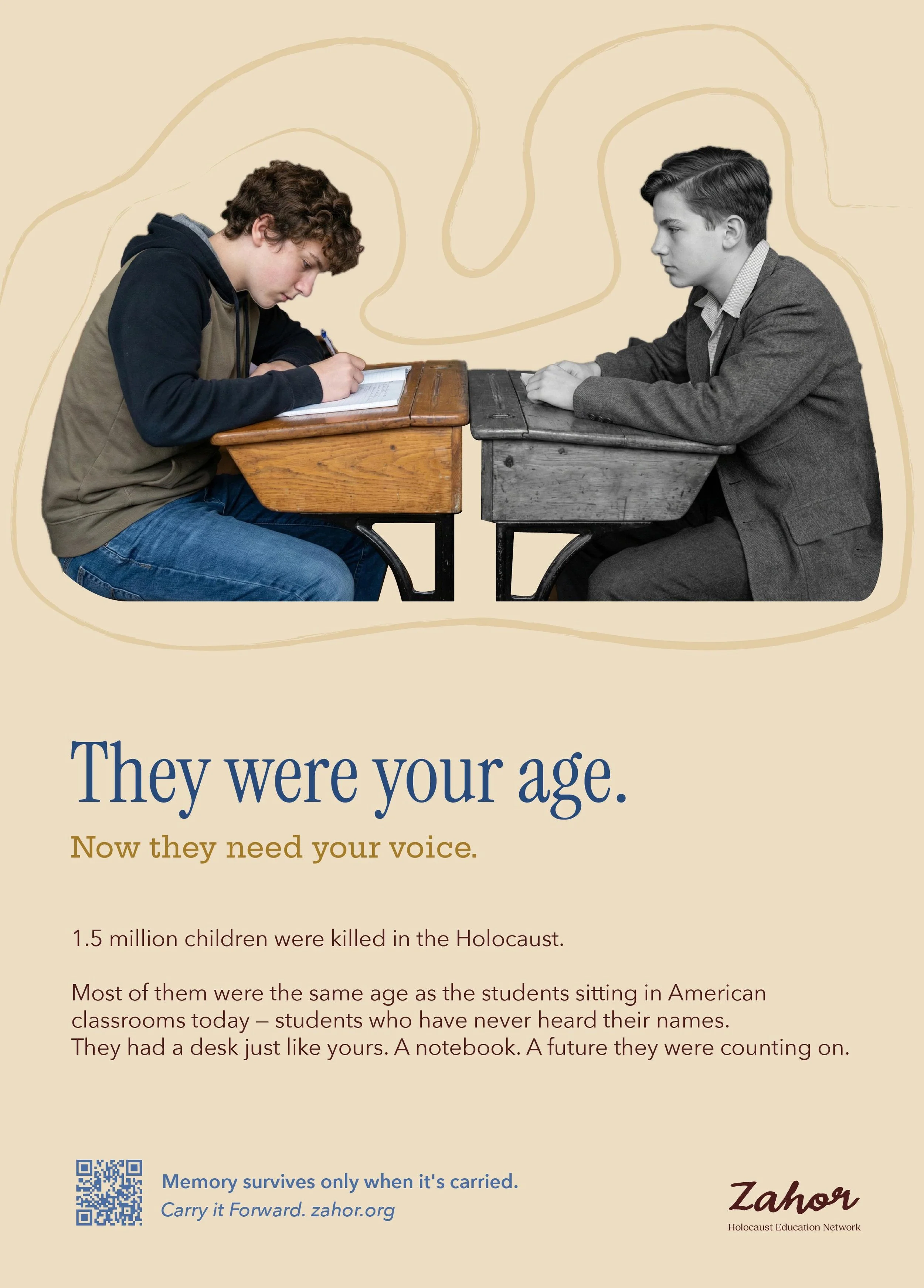
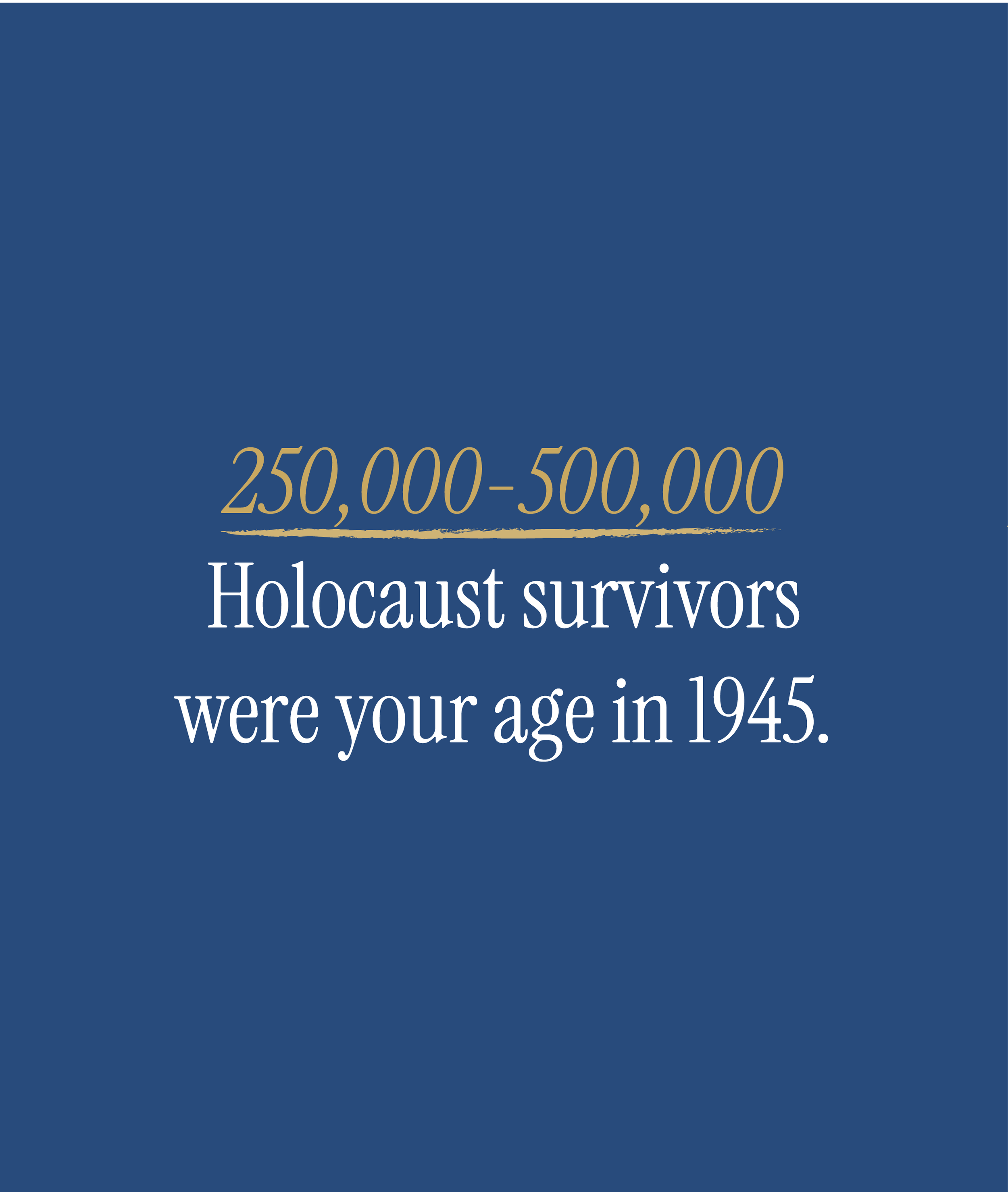
Up to 500,000 Holocaust survivors were ages 14–18, the same age as the students it targets.
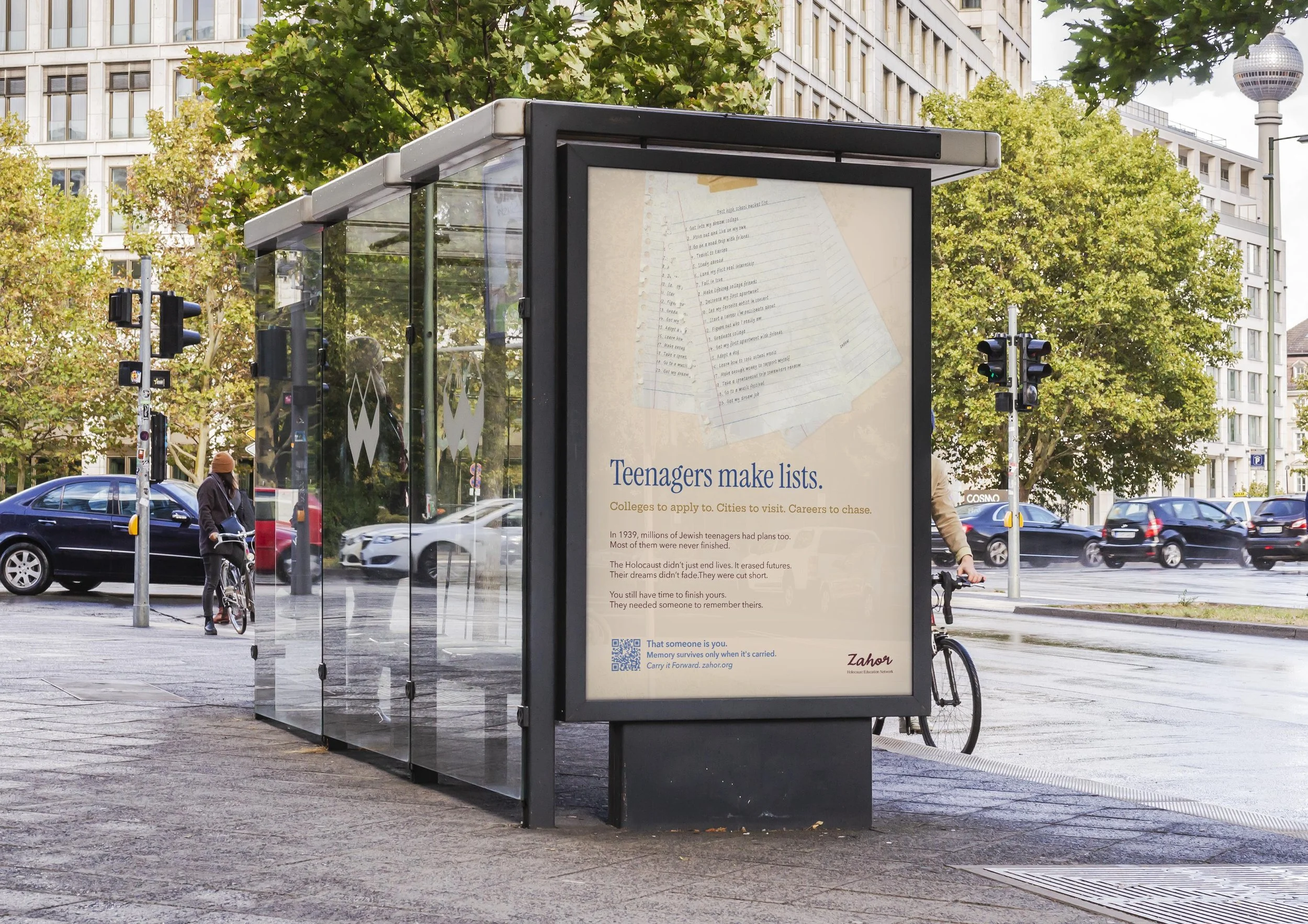
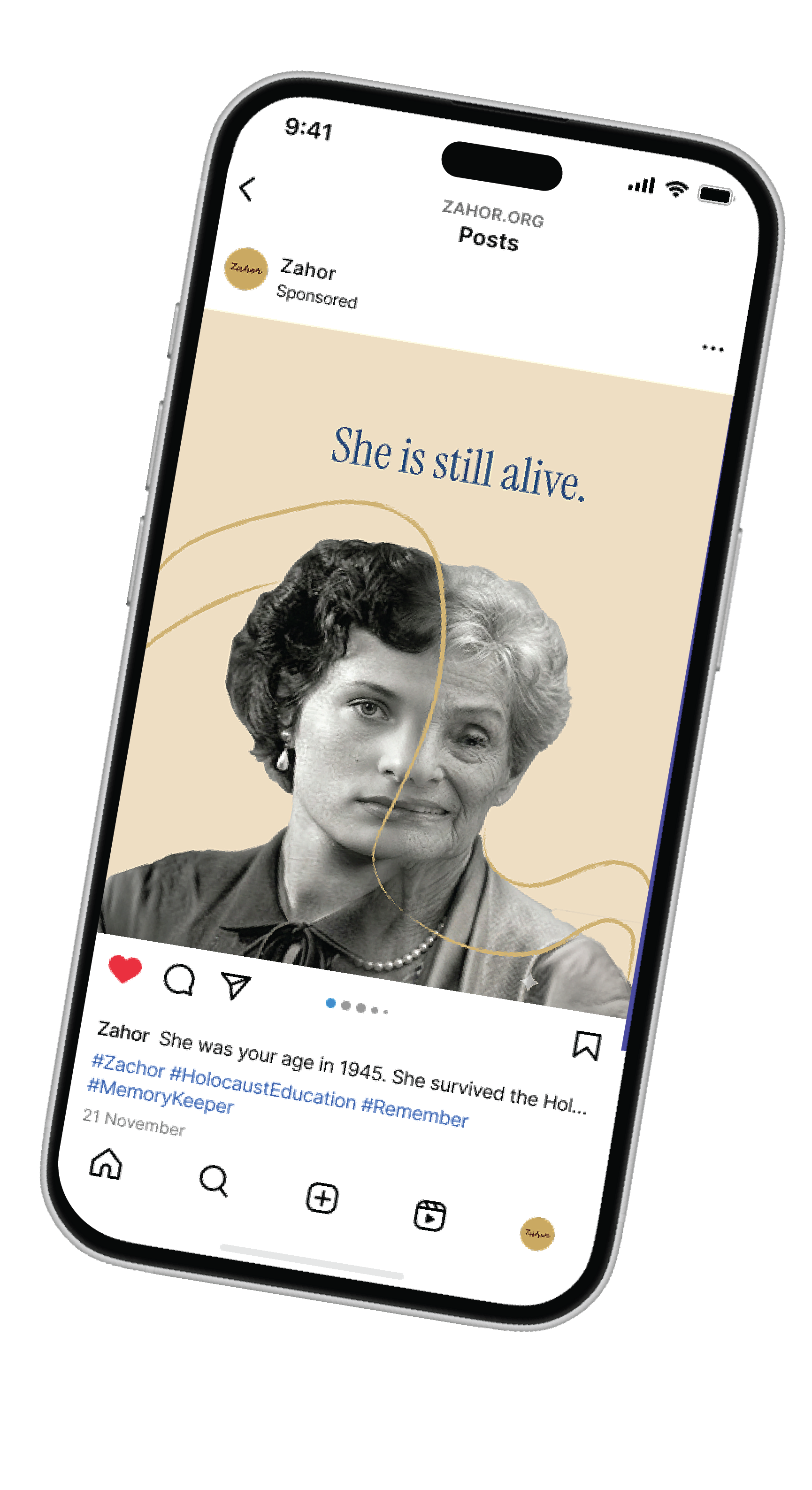
Teen disengagement often comes from distance, “that’s not my history.” This campaign removes that barrier by showing people just like them before introducing any facts.
Across five ads, the strategy is explored through geography, ambition, age, access, and time — each tied to a different audience, brand benefit, and emotional entry point: access, intimacy, responsibility, infrastructure, and urgency.
-
1. It Goes Where Others Won’t
2. It Makes History Personal, Not Institutional
3. It Transforms Students Into Stakeholders
4. It Solves the Infrastructure Problem, Not Just the Awareness Problem
5. It Creates Urgency Without Despair
Demographic Mirroring